No music or singing: Christians trapped in Pakistan
The pastor who welcomed him learned to read before being enslaved at 12, and today he reads the Bible to others.

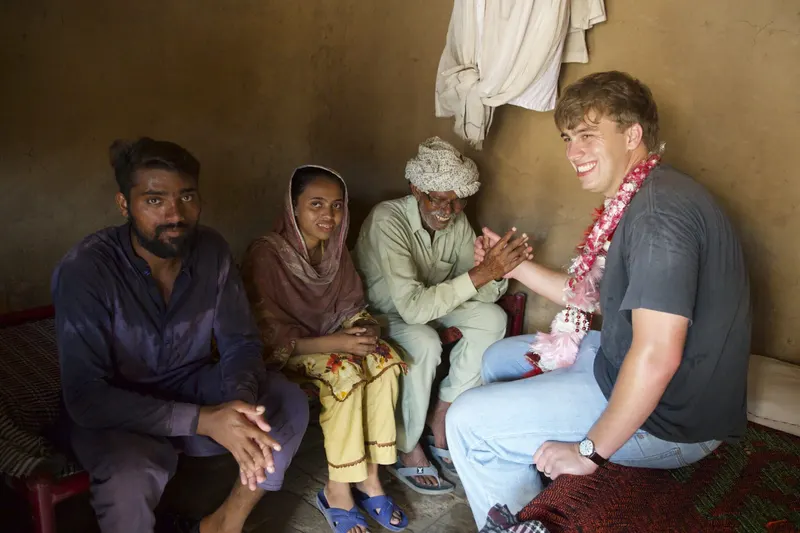
In the brick kilns of Pakistan, no one sings. David Latting, ambassador for Global Christian Relief, traveled in late August to document how Christians trapped in Pakistan live through generations of work and debt, according to Global Christian Relief.
Latting had studied those kilns before traveling. Knowing was not the same as being there. He said that on a screen you can see people sweat, but there the heat envelops you and there is no escape. The first 24 hours he was left speechless; in the first videos, he said, he looked like a deer in headlights.
Noise of machines, silence of voices
What struck him most was the sound. Machines, animals, and shovels hitting the mud without rest. And amid all that din, no music. No one sang. "There was a lot of noise from machines, animals, and shovels hitting the mud, but there was no music. There was no singing" (translation by Sígueme), Latting said.
«His occupation was making bricks. His vocation, caring for souls.»
Behind the noise is a brutal logic: production rules, not the person. He saw men and women, made in the image of God, treated as part of the machine. There was no dignity in that place, he said; only work to be done.
And yet, in every kiln he found families who smiled. He asked them all the same question: how have you endured? How have you kept faith in Christ? The answer repeated: Psalm 23 and Psalm 91. They cried as they said that God had been faithful, that they had no hope and still hoped anyway. "The Lord is my shepherd; I shall not want" (Psalm 23:1, ESV).
The pastor who read the Bible in the kiln
He met Pastor Samuel on a donkey cart, standing because there were no seats. They laughed: Latting is a big man and Samuel did his best to keep him from falling. They did not share a language and understood each other anyway.
Samuel was enslaved at 12. Before that, he had learned to read, and he was the one who had the Bible. He read it to the people and explained what it said; that is why they gathered. His occupation was making bricks. His vocation, caring for souls. For Latting, that day stopped being a visit: he sat at the same table with a brother.
Latting did not want to compare sufferings or present anyone as a hero. But he noted a concrete difference: in Pakistan, whoever believes in Jesus faces cultural pressure and, often, physical aggression. There, faith is not a comfortable detail. His wife prayed Psalm 91 every night while he was away: "He who dwells in the shelter of the Most High will abide in the shadow of the Almighty" (Psalm 91:1, ESV).
Debt that is inherited, work that can be rescued
Work is a gift from God, not a condemnation. When profit rules over the person, employment becomes a chain. That does not happen only in Pakistan. It happens when the loan grows faster than the salary and the double shift is not enough. Scripture does not promise that debt will go away on its own or that a law will fix everything: hope is not in money.
Global Christian Relief states that about $809 is enough to pay off a family's debt and that its goal this year is 500 families. If you are going to help, verify whom you give to and how the funds are used.
Your closest step costs nothing: pray for the believers in Pakistan, for Samuel, and for the families still inside the kilns. If you can give, look for ministries that work there and review how they use the funds. Will you start this week by praying for someone whose name you do not know?