Where the church arrives, there is harvest
A Congolese mother learned to grow corn in a camp in Burundi through a farming school and a church savings group.

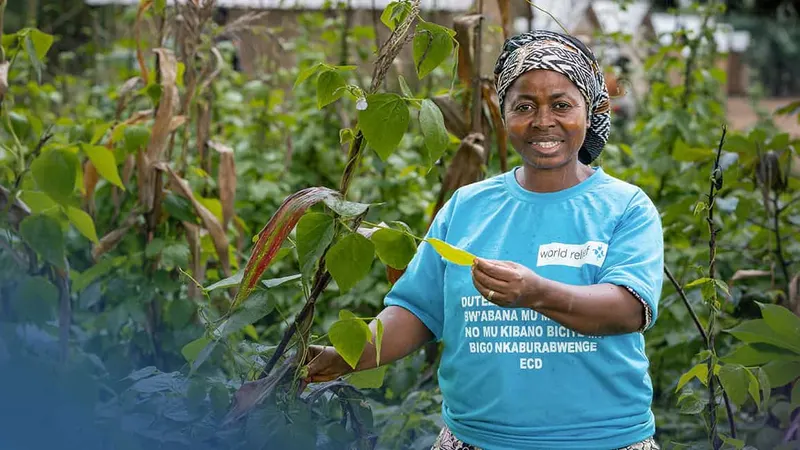
Lukenge doesn't talk about the Congo. She talks about the seeds that grew. This Congolese mother lives in the Nyankanda camp, in Burundi, and her story was told by World Relief: where the church arrives, there is harvest.
About a decade ago, violence entered her community and then her home. Her father-in-law and her father-in-law's sister were killed, she told World Relief. Lukenge escaped with her small children, one of them a newborn, crossed the border between the Congo and Burundi and reached the camp, where she has lived ever since.
The camp gave her safety, not peace of mind. The food that is handed out lasts one or two weeks, even though it is meant to last a month, she said. With few resources and a family to support, the situation became desperate more than once.
«The harvest is almost never seen on the first day; it is seen when someone decides to stay.»
A loan, a plot, corn
The change didn't come with a speech. It came with a farmer field school and a savings group that World Relief opened together with churches inside Nyankanda. At the school, Lukenge learned sound farming practices for growing corn. In the savings group she received a loan with which she rented land to plant her own crop.
For someone looking for their first job, the logic of this story is a little uncomfortable: they didn't give her the harvest. They gave her training, a loan and a plot she had to pay for; the rest she put in herself with her hands and the patience of a season.
The results show on her table. "The seeds grew in my land and they are beautiful," she told World Relief (Sígueme translation). Without that support, she says, her children would be going hungry.
The corn that also feeds the neighbor
What started as food for the home became a small business. Lukenge sells and shares her harvest with other refugees in the camp, and she says she feels grateful and proud because the corn helps her and also helps her neighbors. In a place where food is counted by the week, having your own sack changes the family conversation.
That detail matters: the savings group wasn't set up by a distant office, but by churches in Nyankanda. People who live there, who know their neighbors' names and who lend knowing who they are lending to.
The church that stays
Her service didn't stop at the plot. While she was learning farming, she took her children to the early childhood development program that World Relief runs with volunteers trained by its staff. There they care for children under 5 with learning activities and nutritious meals.
Seeing the effect on her own children, Lukenge volunteered. Many children arrive malnourished; at the center they learned to prepare a porridge that gives them nutrients.
She still hopes for more: a community that prospers and a better education for her children. World Relief reports that it has worked for more than 80 years in 100 countries alongside churches and local communities. Faith that stays shows up in small things: a rented plot, a group that lends, a pot of porridge.
And what about you? This week, look for a church near you that is already serving: a soup kitchen, a food pantry, a trades workshop. Ask what it needs and offer two hours. "And let us not grow weary of doing good, for in due season we will reap, if we do not give up" (Galatians 6:9, ESV).
The harvest is almost never seen on the first day; it is seen when someone decides to stay.