Migrant Caravan: Numbers Don't Erase Faces
La Opinión reports that more than 400 Central Americans entered Mexico through Tapachula while irregular crossings drop to three-decade lows.

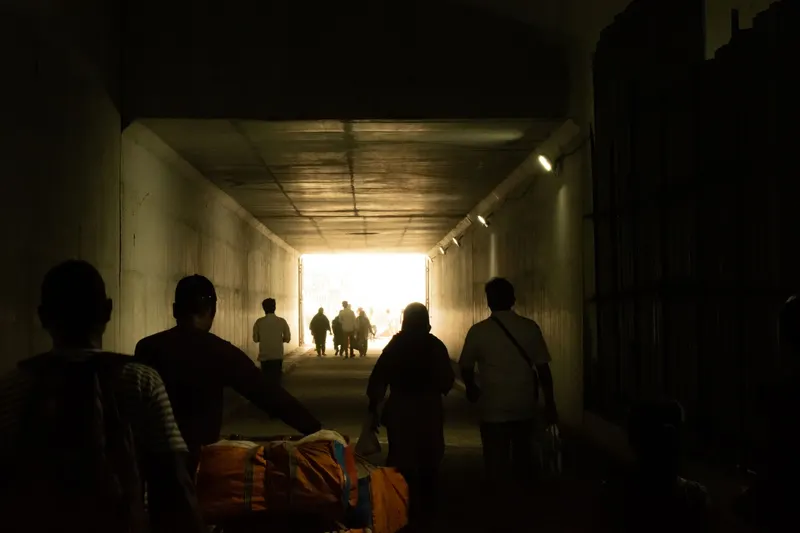
A migrant caravan of more than 400 Central Americans entered Mexico through Tapachula, Chiapas, heading to the United States, La Opinión reported. They left Honduras last Sunday, summoned through WhatsApp chats.
The group thinned out along the way: the Guatemalan Migration Institute counted just over 300 as they passed through Guatemala. Since 2018, more than a dozen caravans have left Honduras and El Salvador. It is not a new phenomenon, though each one has its own story.
What the numbers do say
La Opinión reports that irregular crossings and apprehensions dropped by up to 94% in fiscal year 2025 and so far in 2026, to lows not seen in three decades.
«Defending the immigration order does not require erasing the face of the one who crosses it.»
That figure comes from official data published by Customs and Border Protection (CBP). The Department of Homeland Security (DHS) has been blunt: "There will be no amnesty for immigrants. Not now, not ever." And official data cited by La Opinión indicates that more than 27,000 Hondurans have been deported since Donald Trump's return to the White House.
What does a young Christian do with this? First, don't repeat what you can't verify. Neither "invasion" nor a parade of victims: they are 400 people with names, including women and children, walking 2,390 miles depending on the route they choose.
Second, understand that the law changed. Anyone who arrives in Tijuana, Nogales, Ciudad Juárez or Reynosa — the cities La Opinión mentions — finds more security; if detected, they are transferred to a processing center and deported, with no temporary freedom to wait for their court date. I don't know what each person will decide upon arrival, and it's not my place to judge them from a screen.
Two orders that don't contradict each other
Here Scripture makes me uncomfortable, in a good way. Romans 13 leaves no room for despising authority: "Let every person be subject to the governing authorities. For there is no authority except from God, and those that exist have been instituted by God" (Romans 13:1, ESV). The immigration order exists, and defending it is not a sin.
But Leviticus 19 says something I cannot file away: "You shall treat the stranger who sojourns with you as the native among you, and you shall love him as yourself, for you were strangers in the land of Egypt" (Leviticus 19:34, ESV).
The two texts coexist; neither cancels the other. The mistake is choosing one and using it as a shield to avoid thinking. Defending the immigration order does not require erasing the face of the one who crosses it.
From the screen to your neighbor
What does this mean for someone in their twenties who lives between two cultures? That you can look at a map and, at the same time, at a face. That you can respect a country's law and still ask whether that law treats each person with the dignity they deserve.
And you can talk about migration without turning anyone into a statistic or an enemy.
A concrete step: before commenting on the next news story about caravans, look up the figure in the CBP report or the migration institute of the country in question, and ask yourself what you would do if your family had to leave tomorrow. You don't have to have the answer. Just don't close your eyes.
Before sharing the next headline, ask yourself what drives you to do it: to inform or to win the argument?