Youth Anxiety: 54.7% Struggled Over the Past Year
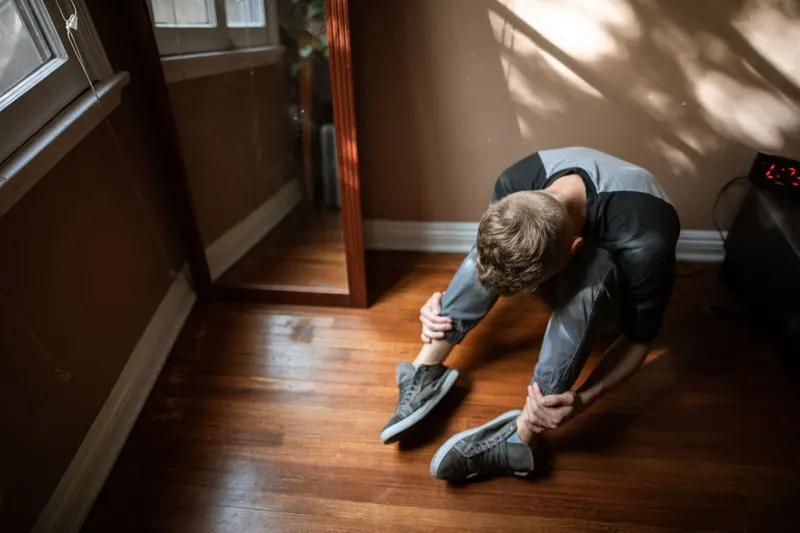
More than half of young people say they dealt with a mental health problem in the past year, and anxiety is the only disorder on the rise.


Anxiety in young people can no longer be brushed off as an anecdote. The Centro Reina Sofía reports that 54.7% say they suffered a mental health problem in the past year, according to El Independiente (October 26, 2026).
The report by Iñigo Vidaurre and Belén Armas Nistal adds that anxiety disorders are among the most common and are the only ones still growing compared to previous years. It also leaves an open question: is anxiety gaining ground, or are we finally putting a name to a distress that used to go unspoken?
Specialists lean toward the second. Greater mental health literacy means many people recognize suffering sooner and stop enduring it in silence. That is also good news.
«Faith doesn't take away the trembling, but it changes who you go through it with.»
What happens in the body and the mind
Anxiety runs through the whole body, not just the head. Vanessa Fernández, a doctor of psychology, explains that it is a normal emotional response to situations we interpret as threatening, even when they are not. The body sweats, tenses up, and speeds up the pulse and breathing; then the mind exaggerates mistakes, jumps ahead to catastrophes, and shrinks what we believe we can endure.
When that state becomes the everyday climate, the cost goes up. Marina Díaz Marsá, a psychiatrist and president of the Spanish Society of Psychiatry and Mental Health, describes a more diffuse, chronic and anticipatory distress, fed by constant digital exposure, uncertainty, and self-demand on several fronts at once. Her conclusion fits in one line: "a generation that learns to live anxious learns to limit its life."
That limit shows up in the body: early somatization and little tolerance for frustration and the unpredictable. Díaz Marsá links this to an educational and social model that offers few chances to fail in a controlled way and that reinforces technological immediacy.
Social media isn't the cause, it's the loudspeaker
Alberto Veira Ramos, professor of Sociology at UC3M, clarifies that platforms do not originate the problem but do amplify insecurity and the need for outside approval. He describes a constant comparison with the sugarcoated version each person posts of themselves, something that, in his view, did not happen before.
The adolescent brain is sensitive to social evaluation, and that sets up a tricky triangle: constant comparison, validation through likes, and showcases of idealized lives. The result is an image of perfection that almost no one can sustain and that covers up far more complex realities.
What a pill can't solve on its own
The use of anxiolytics has increased. Prolonged use of benzodiazepines, beyond four weeks, creates tolerance and dependence and gets in the way of learning strategies to manage anxiety mentally and not only chemically. The experts are not asking us to demonize prescribed medication; they are asking us not to stop there.
Veira also points out that the education system has set aside tools from the classical philosophers for governing temperament, emotions, and fears, and he cites a book by Lou Marinoff that plays on the names of Plato and Prozac.
The pillars the report gathers are concrete: learning to manage your time, keeping healthy routines, having family support without overprotection, and setting boundaries in relationships. None of that sounds epic, and that is exactly why it works: it defuses the alarm little by little.
In terms of faith, prayer does not replace treatment or a conversation with a mental health professional; it accompanies. "Do not be anxious about anything, but in everything by prayer and supplication with thanksgiving let your requests be made known to God. And the peace of God, which surpasses all understanding, will guard your hearts and your minds in Christ Jesus" (Philippians 4:6-7, ESV). Faith doesn't take away the trembling, but it changes who you go through it with.
Pick one small step and take it with someone: talk to a trusted adult, your pastor, or a professional; if it's an emergency, call your country's emergency services, and at findahelpline.com you can find the helpline for your area. What habit will you let go of this week to stop living on alert?