The church that welcomes those who arrive with nothing
Between two cultures and an unresolved status, the Christian community gives what no paperwork can sign: family, dignity and hope.

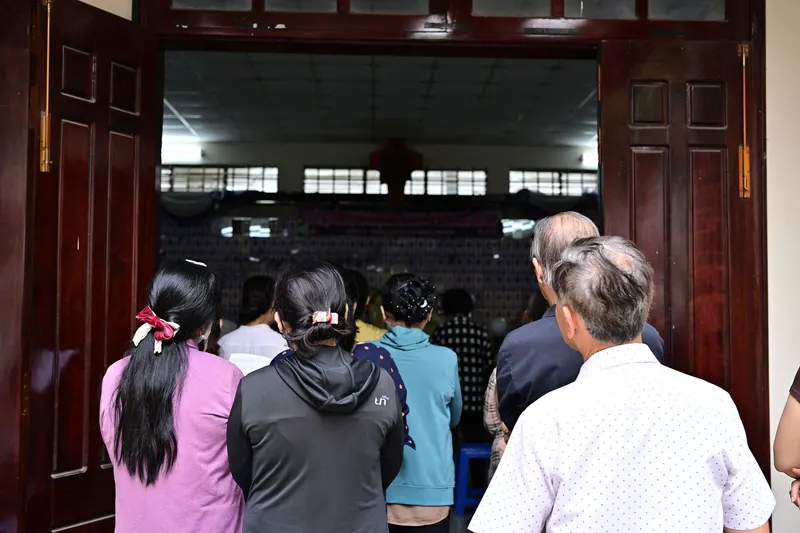
You arrive in a city where no one is waiting for you. You don't know the streets and your papers aren't sorted out. Then someone calls you brother. That is the church that welcomes: a family before a building.
Migration is not a simple change of address. Left behind are the Sunday table, the grandmother's voice, the neighborhood where your last name meant something. The sense of being someone is also lost. In that exposure, a community that calls you "brother" doesn't solve your paperwork: it gives you back your footing.
What the road takes away
Every departure leaves gaps. The first is family: eating alone, having no one to call when the day went badly. The second is dignity: jobs where they pay you late, change your schedule without warning, or treat you like a tool and not a person. The third is hope: a future that depends on a date in a court you don't control.
«The human being is the image of God before being a citizen of any country.»
There Scripture speaks loudly. The human being is the image of God before being a citizen of any country. No immigration law erases that image (see Genesis 1:27, ESV). That is why the church does not look at the newcomer as labor or as a case number: it looks at them as someone to whom God gave value before any authority registered them.
The first-century church wasn't born in a comfortable hall either. It was born among people from many countries and languages gathered in the same city (see Acts 2, ESV). Since then it walks with the one who arrives, not because it is a service agency, but because it itself was welcomed by grace.
An identity you don't have to choose
Between two cultures you live with a question stuck to you: which one do I belong to? Many young people feel they must choose between their parents' country and the country where they grew up, between the Spanish of home and the English of school. In the church the answer is not a middle point. It is a person.
Paul wrote it to people who did not belong to the people of Israel: "So then you are no longer strangers and aliens, but you are fellow citizens with the saints and members of the household of God" (Ephesians 2:19, ESV). He doesn't ask you to choose a flag. He tells you that you already have a home.
That doesn't turn the church into a club of countrymen. There is room for the one who arrived yesterday and the one born on the same block. Nor does it turn your country into the Kingdom: no nation, no party and no flag takes the place of Christ. You can love your land and miss it; the gospel doesn't ask you to renounce your culture, it asks you for one Lord.
And beware of the shortcut. Believing is not a formula for getting papers, a job or a life without problems. Faith is not a lucky charm, and God does not trade blessings for attendance. Grace is bigger than that: it gives you Christ, and with Him an identity that no document signs and no document erases.
Open door or just the living room?
Welcoming has a cost and it shows in details. Learning the full name of the new person, not just their country. Asking about their family by name. Saving them a place in the Wednesday prayer and also at the Sunday table. Walking with them through a procedure without improvising legal advice: that's what lawyers are for; the church can point to trustworthy resources and pray with you while you wait.
What doesn't help is treating the migrant as a mission project or as a political argument. No one wants to be the case of the month. The church welcomes because it too was welcomed: "Therefore welcome one another as Christ has welcomed you, for the glory of God" (Romans 15:7, ESV).
This week you can do something small and concrete. Learn the name of the new person in your church and ask about their family. Pray for them by name, not in general. And ask yourself honestly whether your congregation opens the door or only the waiting room. If this column helped you, share it with someone who just arrived in your city.