Nigeria: foreign funding bill threatens persecution monitors
Bishops and organizations warn that the commission created to oversee foreign aid could silence those documenting attacks on Christians.

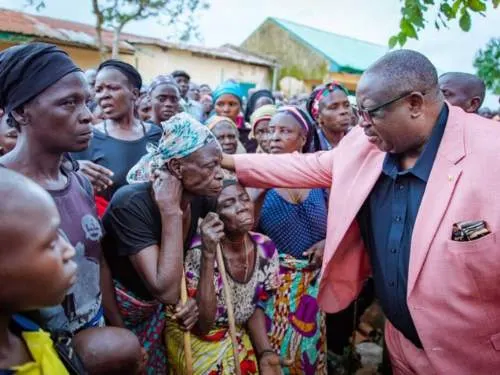
Nigeria's Senate is debating a foreign funding regulation that, according to Nigerian bishops, could limit those who document attacks on Christian communities. Bill SB. 1034 passed its second reading in July, International Christian Concern reported.
A commission to oversee incoming money
The bill is called the Foreign Aid (Regulation, Transparency and Disclosure) Bill, 2026, and in the Senate it carries the label SB. 1034. It would establish a Foreign Aid Regulatory Commission, with new registration, disclosure, audit and compliance requirements for every organization that receives funds from outside the country.
Its stated goals are four: improve transparency, prevent misuse of aid, coordinate development programs and ensure that externally funded activities support Nigeria's priorities. So far, the approach doesn't sound conflictive; the problem appears in how it would be applied.
«An isolated kidnapping reads as common crime; a series of attacks on Christian communities reveals a pattern.»
For organizations that document abuses and criticize public policies, the concern is that the law would leave officials broad discretion to decide who keeps operating.
Bishops ask to stop the bill
The Catholic Bishops' Conference of Nigeria (CBCN) joined those concerns after its Second Plenary Meeting, held in September in Osun State. The bishops asked Congress and the federal government to stop the initiative, according to ICC.
Their argument: organizations that receive foreign assistance already face existing regulatory requirements. And their most concrete objection points to clauses that would allow denying a registration or rejecting its renewal when an entity's activities are not considered "in the national interest."
That language, they warned, would give officials excessive discretionary power over independent organizations, and add another layer of bureaucracy. The warning touches churches, mosques, schools and humanitarian agencies that serve vulnerable communities.
Why who documents matters
In Nigeria, churches run schools, help displaced families, serve in areas hit by terrorism and criminal violence, and maintain a presence where the State and security forces barely reach. That is precisely why they are often the first to record what happened in an attack.
The country faces several crises at once. Boko Haram and the Islamic State West Africa Province (ISWAP), linked to ISIS, remain active in the northeast. Add to that armed banditry, kidnappings, communal violence and farmer-herder conflicts.
Human Rights Watch said the requirement to align externally funded activities with national development plans is insufficiently defined. It warned that sanctions could include fines, loss of operating licenses and prison, and spoke of a deterrent effect on those who scrutinize the government.
Documenting has a concrete function. An isolated kidnapping reads as common crime; a series of attacks on Christian communities reveals a pattern. If organizations stop publishing for fear of losing their registration or funding, the picture the international community receives will be less complete.
"Blessed are those who are persecuted for righteousness' sake, for theirs is the kingdom of heaven." (Matthew 5:10, ESV)
Nigeria's government has the responsibility to protect its citizens regardless of their religion and to ensure that those responsible for violence answer before justice. The bill remains in the Senate, under review. For ICC, Nigeria can strengthen transparency in foreign aid without silencing the organizations that document its hardest problems.
If you want to follow the trail, review the bill's text and what religious freedom groups publish. Pray for Christian communities in northern and central Nigeria, and for those who record what happens to them.