How to Read a Religious Map Before Believing It
In Argentina, a reading of the religious map claims that the evangelical offering "became more attractive to the greatest number of people."

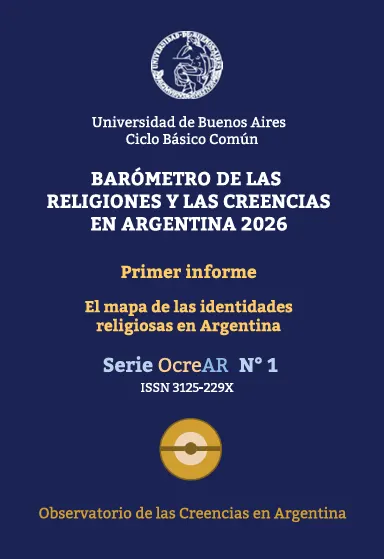
The outlet universidadcalf.com published an analysis of the Argentine religious map. It states: "The offering proposed by the evangelical world became more attractive to the greatest number of people."
That kind of phrase spreads quickly on social media and in church conversations. Before repeating it, it's worth understanding how a religious map is put together. These maps come from surveys and censuses, and they almost always measure declared affiliation: what someone answers when asked which group they belong to. Attendance at worship, Bible reading, and service to others are something else, and they rarely fit in the same chart.
A religious map records what people say about themselves, not what God is doing.
«A religious map records what people say about themselves, not what God is doing.»
What to ask before repeating a figure
Four questions organize any data of this type. Who conducted the survey and how many people were involved. How the question was worded, because asking about religion is not the same as asking about monthly worship attendance. What date the fieldwork has, since a map from ten years ago does not describe this year's country. And whether the study separates those who identify with a group from those who participate in its community life.
There is a detail that is often overlooked: categories change depending on who uses them. "Evangelical" can name a historic denomination, an independent church, or a person who follows Jesus without belonging to a congregation. If the label is elastic, the number is too.
Comparing two studies requires that both use the same question and the same universe of people. If one measures belonging and the other practice, the difference between the results does not mean that people changed their faith.
When the map moves, the mission does not change
That a group grows does not prove that its teaching is correct. Nor does the opposite. Numbers describe a social movement; doctrine is measured against Scripture. "And the Lord added to their number day by day those who were being saved" (Acts 2:47, ESV). In the New Testament, growth appears as God's work.
Meanwhile, the commission remains the same: "Go therefore and make disciples of all nations" (Matthew 28:19, ESV). If more people are drawn to evangelical churches, the underlying question is whether those churches are teaching the Word and accompanying those who come.
What you can do with this map
You don't need to be a sociologist to read it profitably. You can pray for your city without imagining figures that no one measured. You can look at your own congregation honestly: whether a newcomer finds a place to sit, whether the teaching is clear, whether there are adults willing to listen to younger people. And you can pause before forwarding a chart: where it came from, who made it, when it was published.
This week, choose one person who hasn't set foot in a church for months and write to them. Offer them a specific place and a specific time. Maps change slowly; stories change when someone dares to take the first step.