The forbidden fruit was not an apple
The word "apple" never appears in the Eden account, and historians already know where the confusion came from.

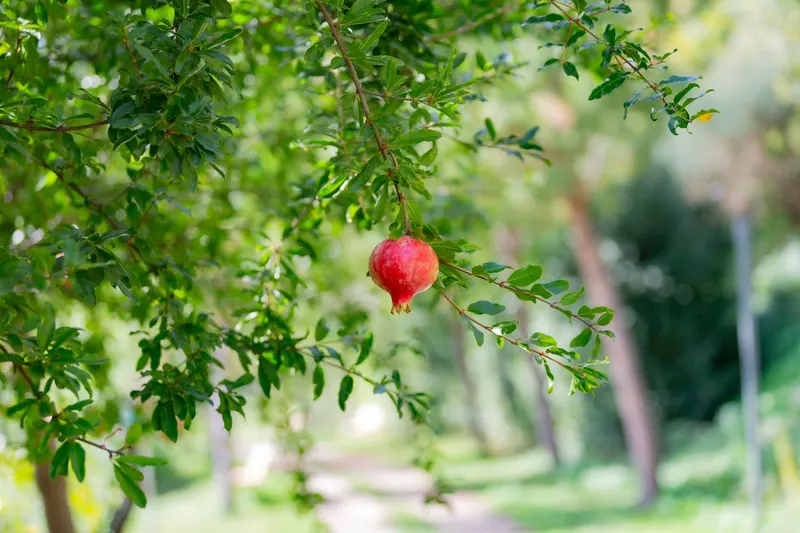
If you search for "apple" in Genesis, you won't find it. The claim that the forbidden fruit of Eden was an apple has been circulating for centuries, and Rutgers University and Live Science have traced where it came from.
The verdict is clear: myth.
Genesis speaks of fruit, not apple
The account is more sober than you remember. God plants a garden, places the human being there, and gives a single prohibition: "but of the tree of the knowledge of good and evil you shall not eat, for in the day that you eat of it you shall surely die" (Genesis 2:17, ESV).
«The Eden apple is tradition, not biblical text»
When the serpent asks, the woman responds by speaking of the fruit of the tree. When both eat, the text again says "fruit." Not once does it name the species.
The only botanical detail in the scene is the improvised clothing: "they sewed fig leaves together" (Genesis 3:7, ESV). That detail led several commentators to think of the fig, although the passage does not affirm it either.
In Hebrew, Genesis 3:6 uses "peri," a generic word for fruit. The term that names the apple is "tapuach," and it does not appear in Genesis or in the Pentateuch, Ari Zivotofsky of Bar-Ilan University told Live Science.
The word "apple" does exist in the Spanish Bible, but in Song of Solomon 2, where it speaks of the beloved and of love, not of Eden.
Where the apple came from
A widely repeated explanation points to Latin. Around the year 382, Jerome translated the Bible into Latin at the request of Pope Damasus I. There "malum" names both evil and apple, and from that play on words the image supposedly arose, according to NPR and Live Science, with historian Robert Appelbaum of Uppsala University.
The most recent research nuances that version. Azzan Yadin-Israel, a professor at Rutgers, reviewed the medieval Latin commentators on Genesis in his 2022 book, published by University of Chicago Press. Almost none used that play on words, and in the art of the fall the apple only appears in the 12th century, in France.
His explanation is linguistic. In Latin, "pomum" served for any fruit; Old French shortened it to "pom," and thus all fruit was named. Over the centuries, that word stuck to the apple, and what was told as just any fruit ended up read as apple.
Art confirms it by its variety. Van Eyck painted a citron in the Ghent Altarpiece (1432); Defendente Ferrari, an apricot (1520-1525); Rubens, a pomegranate (1628-1629); and Dürer engraved an apple in 1504, a work held by the National Gallery of Art.
The poem "Paradise Lost" by John Milton (1667) mentions it and helped fix it. To the list is added a botanical fact: the apple tree we eat originated in Central Asia, according to a 2017 study published in Nature Communications and reported by Live Science.
As early as 1658 the English writer Thomas Browne called it a "common belief," recalls Yadin-Israel. It was not born on the internet: it is an inherited image.
Why this does not weaken the Bible
That Genesis does not name the fruit is not an error. It is the point. The account is not interested in botany, but in a given command, a freedom misused, and its consequences.
What it affirms is that the human being disobeyed God, and Scripture repeats that clearly: "sin came into the world through one man" (Romans 5:12, ESV). Hope does not depend on getting the fruit right, but on the One who undid the damage: "in Christ all will be made alive" (1 Corinthians 15:22, ESV).
GotQuestions in Spanish says it sensibly: the text does not clarify what fruit it was and it was tradition that came to associate it with the apple. What matters is the disobedience and its remedy.
A practical step: when someone repeats the Eden apple, respond without mockery. The Eden apple is tradition, not biblical text. And before quoting a verse, open the passage and read it. What other things do you think the Bible says and does not say?
Sources
- Génesis 2:16-17, Reina-Valera 1960 (Bible.com)
- Génesis 3:6-7, Reina-Valera 1960 (Bible.com)
- Cantares 2:3, Reina-Valera 1960 (Bible.com)
- Romanos 5:12 y 1 Corintios 15:22, Reina-Valera 1960 (Bible.com)
- Rutgers University — «How the Forbidden Fruit Became an Apple»
- University of Chicago Press — «Temptation Transformed» (Azzan Yadin-Israel, 2022)
- Live Science — «Was the 'forbidden fruit' in the Garden of Eden really an apple?»
- NPR — «'Paradise Lost': How The Apple Became The Forbidden Fruit»
- National Gallery of Art — Albrecht Dürer, «Adam and Eve», 1504
- GotQuestions en español — «¿El pecado de Adán y Eva era comer un pedazo de fruto prohibido?»




