Did Constantine Invent the Bible? Not in 325
Nicea (325) met over Christ's divinity, and the first list with the 27 New Testament books dates to 367.

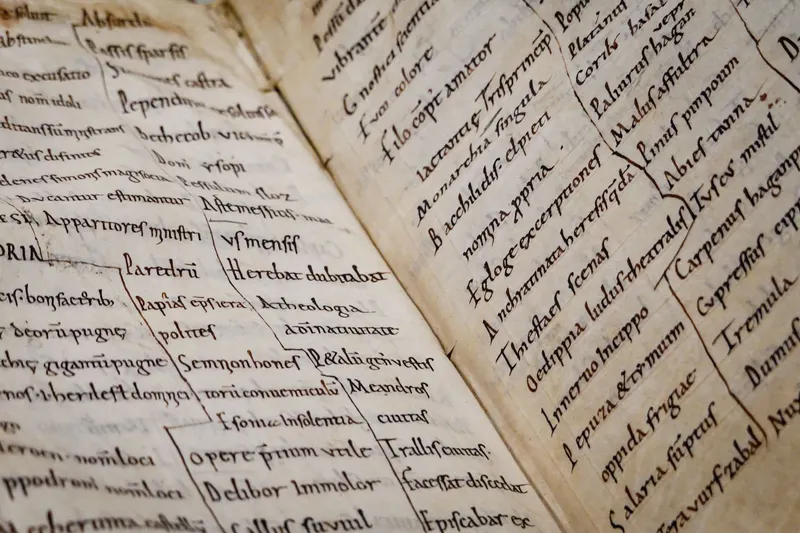
Where did the idea that Constantine invented the Bible come from? It echoes in social media comments, YouTube video essays, and even at the family dinner table. The Text & Canon Institute examined the case point by point, and the verdict is myth.
The legend has a grain of truth, and that's its strength. Constantine did convene the Council of Nicaea in 325, and he did order copies of the Bible in 331. That real fact gets stretched into something else: that the emperor chose the books that suited him. It fits a trendy suspicion: if power assembled the index, the Bible stops being the Word of God and becomes a political agreement. And the story has a genealogy: it appears in the 9th-century "Synodicon Vetus"; it was repeated by Voltaire and, more recently, by Dan Brown in "The Da Vinci Code" (2003).
Nicaea didn't talk about the Bible, it talked about Christ
Let's clarify something: Nicaea was a real church council, with real bishops, not a palace conspiracy. The reason was the Arian dispute: defining whether Christ is God or a creature. From there came the Nicene Creed and about twenty disciplinary canons. In the acts of Nicaea, there is no vote on which books entered the Bible, and the authors of those years don't mention it either.
«He ordered copies; he didn't choose books.»
The New Testament was written in the 1st century, long before Constantine appeared. And the churches already treated it as Scripture. Peter places Paul's letters alongside "the other Scriptures" (2 Peter 3:15-16, ESV); he writes to scattered Christians to warn them about false teachers who twist Paul. In 1 Timothy 5:18, when Paul speaks of elders who preach and teach, he joins Deuteronomy 25:4 with Luke 10:7 and attributes the authority of Scripture to both. And to Timothy, a prisoner, he reminds him: "All Scripture is breathed out by God and profitable for teaching, for reproof, for correction, and for training in righteousness" (2 Timothy 3:16, ESV).
The list that does exist and its year: 367
Around the 2nd century, Marcion made his own shorter list. The church didn't respond by inventing a new canon, but by ratifying what the congregations already used in their worship.
The Christian History Institute dates to 367 the first surviving list that matches book by book with the 27 New Testament books: Athanasius's festal letter 39, forty-two years after Nicaea. Two synods in North Africa later supported that same index: Hippo in 393 and Carthage in 397. Rome defined it officially much later, at Trent in 1546.
The error that comes from a 9th-century manuscript
The "Constantinian" part was an order for copies. In 331, the emperor asked Eusebius for about fifty Bibles for the congregations of Constantinople, according to "Life of Constantine" IV,36. He ordered copies; he didn't choose books. The story that he did choose appears centuries later and traveled all the way to coffee conversations.
No council gave authority to the Bible: the councils recorded what the churches already recognized. And if the Bible doesn't depend on a 4th-century emperor, it doesn't depend on the comment that today calls it an invention. Three clues for the next viral claim: check the exact date of the event, verify if the quoted text talks about that topic, and distrust any story where a single villain explains everything.
This week you can read 2 Peter 3:15-16 and notice that Peter already called Paul's letters Scripture, centuries before Nicaea. What changes in your way of reading it if you know that no human authority assembled it? Where have you been told this phrase?
Sources
- Text & Canon Institute — ¿Realmente Nicea creó la Biblia?
- Encyclopaedia Britannica — First Council of Nicaea
- Bart Ehrman — What Was Decided at the Council of Nicaea in 325?
- Christian History Institute — 367 Athanasius Defines the New Testament
- Coalición por el Evangelio — El canon bíblico
- Roger Pearse (Tertullian.org) — The Council of Nicaea and the Bible
- Ligonier Ministries — The Canon of the Bible
- Eusebio, Vida de Constantino IV,36 — Cincuenta Biblias de Constantino
- Bible Gateway — 2 Pedro 3:15-16, RVR1960




