Chhattisgarh court reviews conversion law
A citizen petition challenges the prior notices and the burden of proof the rule imposes on anyone who changes faith.

The Chhattisgarh conversion law reached judicial review this month. On October 8, the High Court of that Indian state heard a petition against it, International Christian Concern reported.
What the 2026 rule changed
The court gave the state government three weeks to respond to the petitioners' objections. The Chhattisgarh Legislative Assembly passed the Freedom of Religion Act, known as Dharma Swatantrya, in March 2026. The governor approved it in April, replacing a similar rule in force since 1968.
Those who promoted it presented it as a brake on forced or fraudulent conversions. The petitioners argue the opposite: that the 2026 rule creates an unusual climate of punishment. The law reaches even those who decide to change faith on their own, requiring public declarations and several official permits.
«Persecution does not always come with blows; many times it advances through paperwork and boycotts.»
The points being challenged
Lawyer Harshmander Rastogi signed the petition. S. Muralidhar and Manoj Paranjpe presented it before the court. For them, a person's faith should not depend on state permission or a prior public notice, and the law works as a tool of officially backed profiling.
The text defines "mass conversion" as that of two or more people. That case is punishable by a sentence ranging from 10 years in prison to life imprisonment. Baptizing two siblings or an entire family can lead to criminal proceedings.
It also requires notifying the district magistrate 30 days in advance before changing faith. For the petitioners, that public notice removes privacy and leaves the person exposed to pressure from their community before deciding.
The offenses do not allow bail, and police can arrest without a warrant based on third-party complaints that no one verified. The burden of proof is reversed: the accused pastor or believer must prove their innocence, not the state prove the crime.
The petition alleges the rule violates the right to privacy, personal liberty and freedom of conscience under Article 25 of the Constitution of India.
Boycotts, water and burials
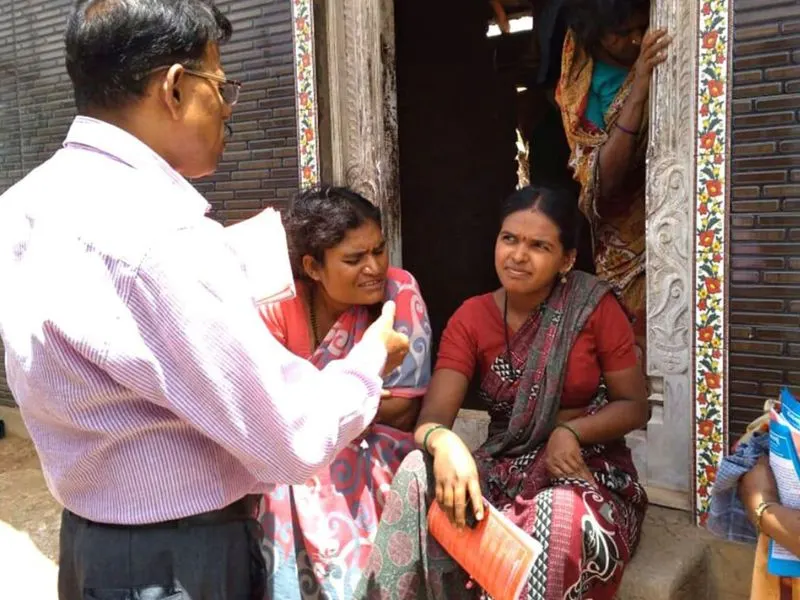
Outside the courts, harassment continues in majority-tribal districts. Christian families who refuse to renounce their faith face economic boycotts, International Christian Concern reported. They are cut off from community water pumps, excluded from government employment programs and prevented from gathering forest products.
The conflict reaches even burials: local vigilante groups prevent Christians from burying their dead in the village's common cemeteries.
Persecution does not always come with blows; many times it advances through paperwork and boycotts. "Indeed, all who desire to live a godly life in Christ Jesus will be persecuted" (2 Timothy 3:12, ESV).
You can pray for these families and for those handling their case, support organizations that accompany them and verify information before sharing it. What would you do if your faith cost you access to the village's water?