Bible in 5: Mark 8:11-21 — Do you still not understand?
The Pharisees demand a sign from heaven and the disciples argue over a forgotten loaf; Jesus answers with a question.

This installment of Bible in 5 reads Mark 8:11-21, a passage from the shortest of the four Gospels. The Encyclopaedia Britannica attributes it to Mark, a disciple of Peter and companion of Paul, who wrote for believers coming from paganism.
A sign to test him
Jesus had just fed four thousand people in Gentile territory and crossed the lake to Dalmanutha (see Mark 8:1-10). There the Pharisees didn't come to listen to him: they came to argue.
They asked him for a sign from heaven to test him (see Mark 8:11). His response was a groan: "Why does this generation seek a sign? Truly, I say to you, no sign will be given to this generation." (Mark 8:12, ESV)
«If doubt presses in, don't ask for a new sign: reread that list and return to what God has already said.»
That groan matters. The same verb appears when he sighs before the deaf and mute man (see Mark 7:34). Unbelief grieves Jesus; he doesn't answer it with a spectacle.
Herod Antipas, tetrarch of Galilee and Perea, also hoped to see him perform some miracle before judging him (see Luke 23:8). Two different leavens and the same yeast: wanting proof in order to believe.
The forgotten loaf
Already in the boat, the disciples noticed they had only one loaf (see Mark 8:14). Jesus warned them about the leaven of the Pharisees and of Herod (see Mark 8:15), and they thought he was talking about lunch. They argued among themselves.
Then came the question the passage won't let go: "Having eyes do you not see, and having ears do you not hear? And do you not remember?" (Mark 8:18, ESV)
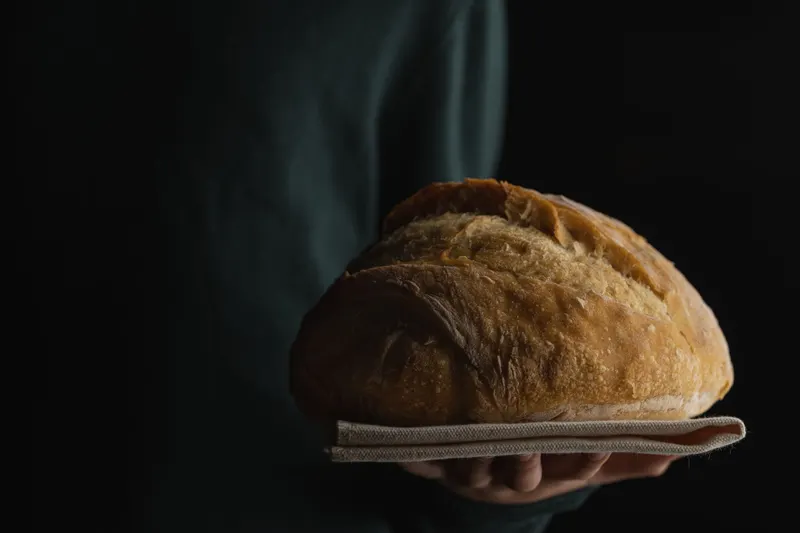
They were looking at the one who had just multiplied the loaves and were anxious about a loaf. Jesus made them count what was left over: twelve baskets from the five thousand, seven baskets from the four thousand (see Mark 8:19-20). And he ended by asking how much longer it would take them to understand (see Mark 8:21).
What we have already seen
The passage reveals something uncomfortable: looking is not the same as trusting. Jesus' question echoes Isaiah 6:9-10, where people hear without understanding and see without comprehending. Only God opens eyes.
Later, in Bethsaida, a blind man first sees people like trees and then everything clearly (see Mark 8:22-26). Further on, Peter finally confesses who Jesus is (see Mark 8:29). That's how blindness ends: when he touches it.
And there's the leaven, which ferments from something small (see 1 Corinthians 5:6). Two contagions: religiosity that puts God on trial and the power that prefers to watch him from afar.
Today we ask for signs like concrete results: the scholarship that doesn't come, the job that takes too long, the immigration papers, the rent that isn't enough, the health of someone we love. If God gives me this, I'll take faith seriously, we think. That puts God in the dock and leaves us as judges.
And memory stays short. God answers, and three months later we're back to calculating from scarcity.
This week, set aside a moment to write down by hand three things God has already done in your life this year: something you asked for and it came, something you didn't ask for and it also came, a door that closed just in time. Leave them where you can see them.
If doubt presses in, don't ask for a new sign: reread that list and return to what God has already said. Also choose one small leaven—an account, a channel, or a chat that every day repeats that none of this matters—and pause it for seven days.
Look back for a moment: what answer or provision from this year sustains your trust today, even if tomorrow no new sign comes?




