Bible in 5: Mark 8:1-10 — Seven Loaves for Four Thousand
A crowd goes three days without eating, and Jesus responds with compassion, not a speech.

Mark 8:1-10, in the Reina-Valera 1960 version published by Bible Gateway, tells what happened when a crowd had been with Jesus for three days in a desolate place, with nothing to eat.
A desert, three days, and seven loaves
Mark wrote his gospel in Greek for readers who were not Jews, and he explained customs they didn't know. Scholars usually date it around AD 70. The oldest tradition identifies him with John Mark, Peter's interpreter, as Papias records in Eusebius's Church History and Irenaeus in Against Heresies.
The scene comes after the journey through Tyre and the Decapolis, a mostly Gentile area (Mark 7:31). Earlier, Jesus had fed five thousand in Jewish territory (Mark 6:30-44).
«The Lord is the source; we are the channel.»
He told his disciples: "I have compassion on the crowd, because they have been with me now three days and have nothing to eat" (Mark 8:2, ESV). They responded by asking where they could get bread in a desert. Jesus wanted to know how many loaves they had: seven, and a few small fish.
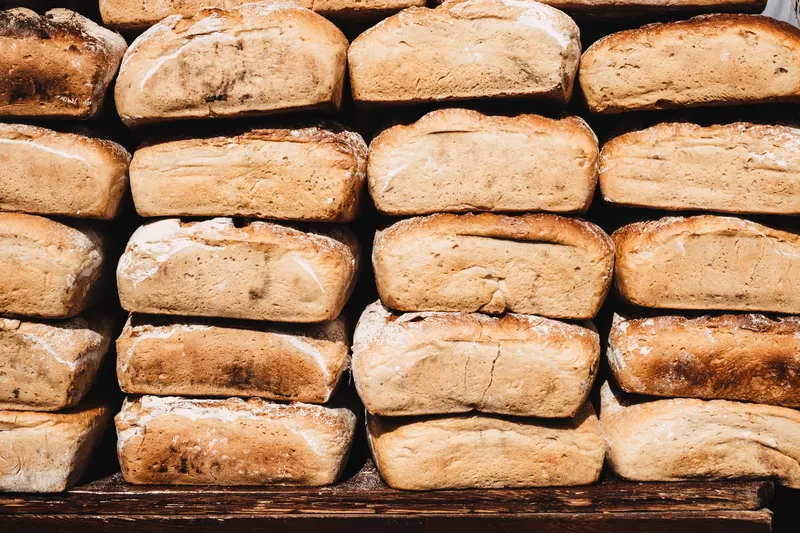
He told the crowd to sit down, gave thanks, broke the loaves, and put them in his disciples' hands to distribute. "And they ate and were satisfied. And they took up the broken pieces left over, seven baskets full" (Mark 8:8, ESV). About four thousand ate, and many had come from far away.
What it reveals about the God who provides
Jesus isn't moved by a vague feeling. He sees the need and responds; he doesn't send people home empty-handed.
Bread is a gift. The crowd didn't pay, didn't earn it, didn't contribute anything, and ate until satisfied. Like manna in the desert (Exodus 16), food comes from above. The psalmist sang it: "The eyes of all look to you, and you give them their food in due season" (Psalm 145:15, ESV).
Elisha fed a hundred men with twenty loaves and there was some left over (2 Kings 4:42-44). Here Jesus does something greater, and in Gentile land: the bread reaches even those who were not of the people.
Jesus uses his disciples' hands to distribute, but the power doesn't come from them. The Lord is the source; we are the channel.
This bread also points to something greater. At the last supper, Jesus will speak of his body given (Mark 14:22-24); in John 6:35 he presents himself as the bread of life. The same Lord who gives daily food also sustains the soul.
This passage doesn't promise that the generous will have money left over.
What you can do this week
The desert has a simple characteristic: there's nothing there. For many young people, that's the payday: rent, half-empty pantry, money sent home, a job that isn't enough.
Jesus didn't start with what was missing. He asked, "How many loaves do you have?" (Mark 8:5, ESV). The inventory was seven loaves and a few small fish. Start there: do your real math, not the math of what you'd like to have.
Then put it into circulation. Share your lunch, help the person who just came to church, offer your time. Bread multiplies when it passes from hand to hand.
Give thanks before eating, as Jesus did (Mark 8:6). It's not an inherited custom: it's recognizing where what you have comes from. And when God has already shown you his provision, don't go back to calculating from scarcity.
Stay with one question: if Jesus asked you today for the inventory of what you have, would you present what's already in your hands or the list of what you lack?
Sources
- Biblia RVR1960, Marcos 8:1-10 (Bible Gateway)
- Biblia RVR1960, Marcos 6:30-44 (Bible Gateway)
- Biblia RVR1960, Marcos 8:11-21 (Bible Gateway)
- Eusebio, Historia Eclesiástica III.39 (New Advent)
- Ireneo, Contra las herejías III.1.1 (New Advent)
- Encyclopedia of the Bible, «Dalmanutha» (Bible Gateway)
- Britannica, «Gospel According to Mark»
- Wikipedia, «Gospel of Mark»




