Bible in 5: Mark 7:31-37 — Ephphatha, Be Opened
The shortest gospel holds an Aramaic word and a sigh from Jesus before opening closed ears.

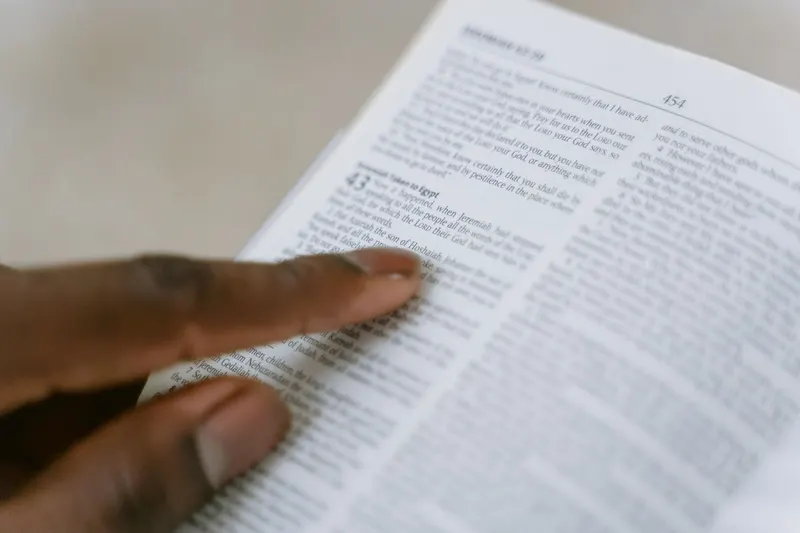
The man couldn't hear, and speaking well was hard for him. Bible in 5 arrives today at Mark 7:31-37, and no one had a fix for his case. Then Jesus took him aside from the crowd, sighed, and spoke a word in Aramaic: Ephphatha.
A detour through Gentile land
Mark wrote the shortest gospel and the one with the fastest pace. The oldest tradition, recorded by Eusebius of Caesarea, presents him as Peter's interpreter; that's why the text keeps concrete details and Aramaic words just as they were. The book was going to believers of Gentile origin, probably in Rome, and is usually dated between AD 50 and 60.
Just before, Jesus argued with the Pharisees about what defiles a person: the problem isn't on the plate, but in the heart (Mark 7:21-23, ESV). Then he attended to a Syrophoenician woman in Tyre. From there he goes toward Sidon to return to Galilee crossing Decapolis, a league of ten Greek cities, according to Britannica. The healed man wasn't a textbook case: he was a neighbor in an area where no one expected the Messiah.
«Jesus prays to the Father and sighs deeply: he doesn't look at pain from afar.»
What this man reveals about Jesus
The detail that stops me most is v. 33: Jesus takes him aside. No audience, no stage. That man wasn't treated as a number.
Then come the gestures: fingers in the ears, saliva, touching the tongue. He couldn't hear any promise. So Jesus showed it to him in the only language he had left: touch. And then, "and looking up to heaven, he sighed and said to him, 'Ephphatha,' that is, 'Be opened.'" (Mark 7:34, ESV). The verb behind "sighed" is the same as in Mark 8:12. Jesus prays to the Father and sighs deeply: he doesn't look at pain from afar.
The result comes whole: "And his ears were opened, his tongue was released, and he spoke plainly." (Mark 7:35, ESV). The word of the Lord does what it says.
Isaiah had announced that day: "Then the eyes of the blind shall be opened, and the ears of the deaf unstopped." (Isaiah 35:5, ESV). The people's amazement is the echo of the prophet: "he makes the deaf hear and the mute speak." And everything is grace. The man contributes no faith or credentials; he's in Gentile land and others bring him. "No one can come to me unless the Father who sent me draws him." (John 6:44, ESV). The "he has done all things well" of v. 37 sounds like Genesis 1:31: where Jesus arrives, something new begins.
Open the ear and loosen the tongue
How many hours a day do you spend hearing? Playlist, podcast, clips, the class group. In the middle of that noise, when did your soul listen to God calmly? We carry the tongue looser: for gossip, complaint, hurtful comments.
One step for this week: take yourself away from people, like Jesus. Ten minutes, no phone, in a closed room. Read the passage aloud and ask for one thing: "Lord, open my ear." It's not a formula; it's admitting who can do it.
If you're afraid to pray in public or tell what God has done with you, look at this man. Maybe you think you speak badly, or that your Spanish falls short when you get nervous. He came out speaking well because Christ touched him.
And encourage yourself to be one of those who bring others. Think of who drifted away from church, who can't get there alone, who lives with deafness or difficulty speaking. May there be sign language interpretation, may subtitles accompany the service, and may no one feel rushed when speaking.
If Jesus said to you today "Ephphatha"—"be opened"—what is the first thing you would start to hear, and what would you say afterward?




