Bible in 5: Mark 4 — Who Is This?
A stormy night on the Sea of Galilee left the disciples with a question that still reaches us today.

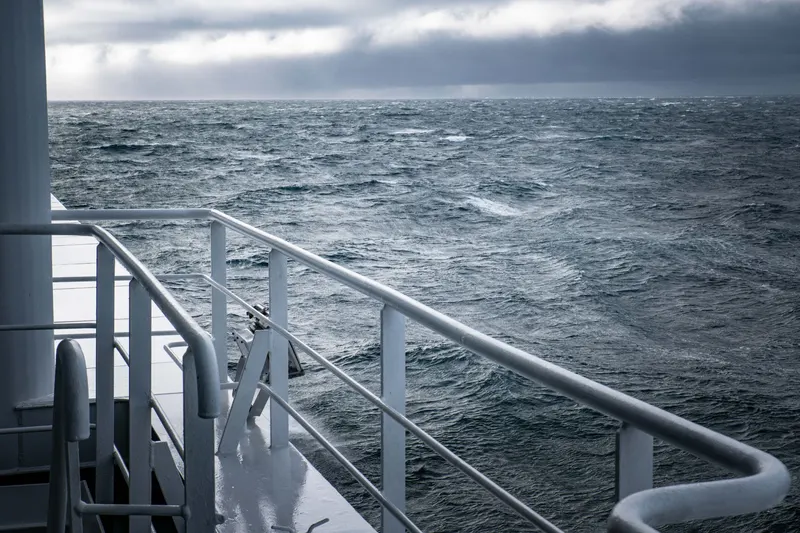
Mark 4 closes with a night on the Sea of Galilee. Jesus told his disciples to cross to the other side; halfway there a storm broke out and he was sleeping in the stern. (Mark 4:35-41, ESV)
The storm hits mid-journey
Mark is the shortest of the four Gospels and the one that moves fastest. It was written by John Mark, very close to Peter's preaching, for readers who did not come from Judaism; it is estimated that it circulated in Rome between AD 50 and 65.
Before this scene, Jesus teaches from a boat with parables of the kingdom: a sower, a lamp, a seed that grows by itself, and a mustard seed. The kingdom starts tiny and grows on its own, even while everyone sleeps. Then, in 5:1-20, they cross to the country of the Gerasenes and free a tormented man. The storm hits right at the crossing, between a teaching and the miracle that follows.
The text notes the details: it was night, there were other boats, and Jesus was sleeping on a cushion, exhausted after a full day of teaching.
What the wind and sea recognize
In the Psalms and in Job, the only one who rules the sea is God. Here that command is spoken by a tired man:
"And he awoke and rebuked the wind and said to the sea, 'Peace! Be still!' And the wind ceased, and there was a great calm." (Mark 4:39, ESV)
And their fear changed its target:
"And they were filled with great fear and said to one another, 'Who then is this, that even the wind and the sea obey him?'" (Mark 4:41, ESV)
That question is the one Mark leaves for the reader. The passage shows someone fully human, who falls asleep from exhaustion, and fully God, who shuts down the storm with a word. It also shows something of the gospel: the boat was not saved by them, it was saved by him. Their faith was small; his presence was enough.
And there is a detail that is only understood at the end of the Gospel: the one who here orders silence to the wind is the one who later, hanging on a cross, would carry the darkest storm without anyone coming to save him. What he guarantees is not a trip without waves, but that he will stay with you to the other shore.
When the storm has your name
You also have a storm with your own name. An exam that defines your scholarship. Money that doesn't stretch to cover rent. Paperwork that gets stuck. Anxiety that shows up at dawn and doesn't leave. The doubt about whether this believing thing is for you. Or that guilt you've been dragging from home.
The Bible does not promise that with enough faith there will be no storm. What it does promise is company inside the storm. The disciples did something simple: they woke him up and told him what was happening, fear included. You don't need a steady voice or pretty words. You need to speak to him.
Talk to him just as you are. And look who goes with you: your church, a believing friend, someone who intercedes for you on the days when you can't even pray. Fear doesn't disappear by having faith. What changes is who you turn to when you feel it.
To think about: when the storm doesn't calm down right away, where is your trust placed: in things turning out well, or in Jesus not having left your boat?




