500 Christian Families Could Be Freed From Slavery
Global Christian Relief reported that more than 900 people will leave the brick kilns where they inherited debts.

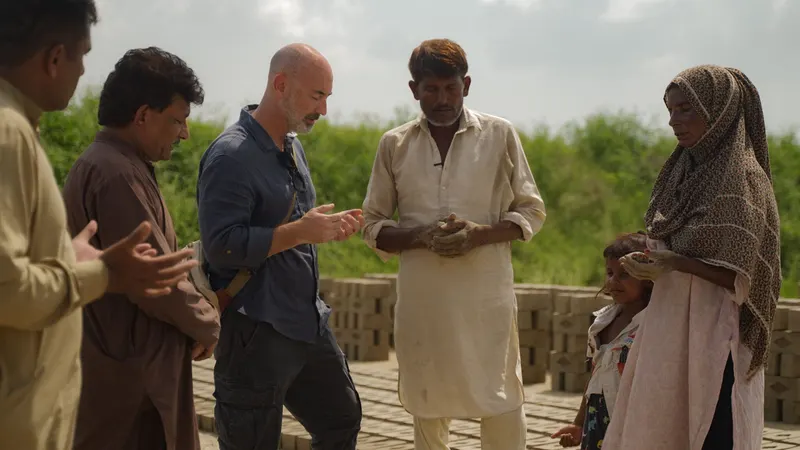
Global Christian Relief announced on October 21, 2026 that 500 more Christian families will be freed in Pakistan. That's more than 900 people, parents and children, who will leave the brick kilns where their debts were passed down.
The organization considered the goal ambitious: two years ago it raised funds to free 50 families; last year, about 200; now, 500 more.
Pakistan has a Christian minority of less than 2% of the population, according to Global Christian Relief. That number translates into persistent discrimination: less access to quality education and stable jobs.
«The freedom Christ gives can't be bought with money, but it does change the way we treat captives.»
When illness or another emergency hits, many impoverished families take out loans from brick kiln owners on abusive terms. Low wages make repayment nearly impossible, and entire families end up tied to the kiln for years or decades. Small debts grow, and children end up inheriting their parents' debts.
From Inherited Debt to Freedom
Global Christian Relief estimates that about $809 is enough to pay off a family's debt. But the organization says it doesn't stop at paying the debt: it invests in income opportunities and financial training.
Its partners walk alongside freed families for two years after the debt relief. The goal is to break the cycle of poverty that led them to the kiln and help them build a better life outside it.
The report mentions specific programs.
It hopes to cover 15,000 medical visits, provide training and business materials to 325 young Christian women, offer job or business support to 380 young Pakistani Christians, deliver holiday packages to 150 Christian widows and their families, and fund local television and social media ministries to share the gospel. All figures are from Global Christian Relief.
More Than Paying a Debt
James, a name changed for security reasons, worked for years at a brick kiln alongside his wife. The hours were exhausting and his health was getting worse, which made it hard for him to meet production targets. Global Christian Relief paid off his debts and gave him a donkey cart as a secondary source of income.
With what he saved, he bought a rickshaw. "They didn't just give us a cart; they gave us our freedom," James said, according to the report (translation by Sígueme). Now, he says, his children see a father who is independent.
Sidra, also a changed name, lives a different situation. Her husband works at a brick kiln. When her children fell ill with fever, the family couldn't afford treatment. Sidra took them to a medical camp, where the staff listened to them and examined them carefully.
Timely treatment gave her hope, according to her testimony gathered by Global Christian Relief. Health also weighs heavily when a family is in debt.
Spiritual Freedom and Real Compassion
The Bible does not ignore injustice. Jesus said: "So if the Son sets you free, you will be free indeed" (John 8:36, ESV). He said it to people who were slaves to sin (John 8:34), not to an economic debt.
That spiritual freedom is the root of all dignity. It doesn't replace the need for justice in this life, but it does move the church to seek the good of its neighbor.
The freedom Christ gives can't be bought with money, but it does change the way we treat captives. Global Christian Relief presents its work as a response of faith to suffering brothers and sisters.
The focus is the families hoping to leave the kiln. And an honest question remains: how can your church walk alongside those facing debt slavery, without reducing their pain to a number?
Pray for the 500 families and for those who still have no way out. Ask your community how it can serve, give, or support organizations working for the dignity of the vulnerable. Christian compassion doesn't stop at words.