Your feed isn't neutral: TikTok and Instagram shape desire
A study shared by Noticias UNAB links those two apps to a major impact on mental health.

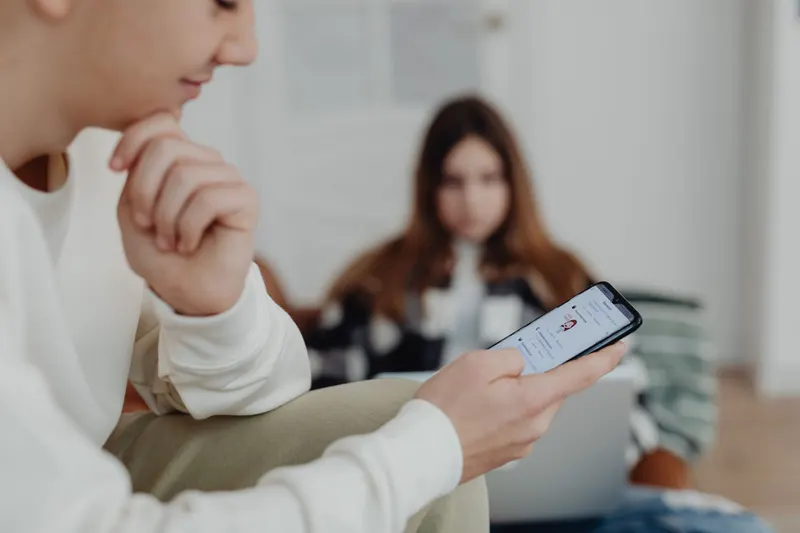
A study shared by Noticias UNAB claims that TikTok and Instagram would have a major impact on mental health. It doesn't talk about "social media" in general: it talks about two. My question is different: what if scrolling doesn't distract, it shapes?
Not all platforms weigh the same
I don't overlook the "would have" in the headline. A serious study proposes a possible relationship; it doesn't sentence that your phone has made you sick. But the difference it highlights also interests me: why those two apps and not all of them.
I spend hours on WhatsApp and I don't feel it leaves me empty. With TikTok it's different. WhatsApp is a pipe through which my people pass. TikTok and Instagram are a display window that decides what I see first, for how long, and with what emotion.
«Repetition does its slow work.»
That's the point. The useful question isn't how many minutes I accumulated, but what is being formed in me while I accumulate them. Repetition does its slow work: it teaches me what deserves laughter, what deserves envy, and what deserves haste. That learning stays.
What scrolling shapes in you
The Bible says it bluntly: "Keep your heart with all vigilance, for from it flow the springs of life" (Proverbs 4:23, ESV). In Scripture, the heart is the center of what you want, not just what you feel. And what you want is educated by what you look at every day.
I don't think the way out is deleting the app to feel superior. Nor do I think the fault is yours: the algorithm is built to retain you. I believe in something simpler and more uncomfortable: asking yourself what desire grows in there.
If your feed leaves you more grateful and more present with your people, maybe there's no problem. If it leaves you measuring yourself against edited lives and bodies that don't exist, something is being molded without you noticing. Paul invites us to set our minds on what is true and pure (see Philippians 4:8). And if the anxiety doesn't go down when you turn off the phone, that isn't fixed with willpower: seek professional support and a community that truly knows you.
For many Hispanics of my generation, the feed is a refuge. Between two cultures, between the Spanish at home and the English at school, the screen is the place where no one corrects your accent. It's also a display window: public proof that you're okay, that you do belong. I understand the impulse. I'm worried about the rent it charges: comparison.
I'm not proposing a life without social media or a guilt trip. I'm proposing to distinguish. There are feeds that bring you closer to your people and feeds that train you to consume. There are feeds that show you the world and feeds that teach you to desire another one.
One hour without a feed
Choose one hour this week without a feed. Not a full day or a lifelong promise: one hour, with your phone in another room. Take the test without judging yourself.
When you finish, ask yourself seriously: "what were you looking for there?" The answer may be company, rest, or belonging, and those things are good. You were just looking for them in a place that charges a lot. If you discover that scrolling isn't shaping you well, you have permission to change the habit, not to punish yourself.






