Why It's Hard to Ask for Help and How to Start
Naming what holds you back is worth more than waiting for the perfect moment to speak up.

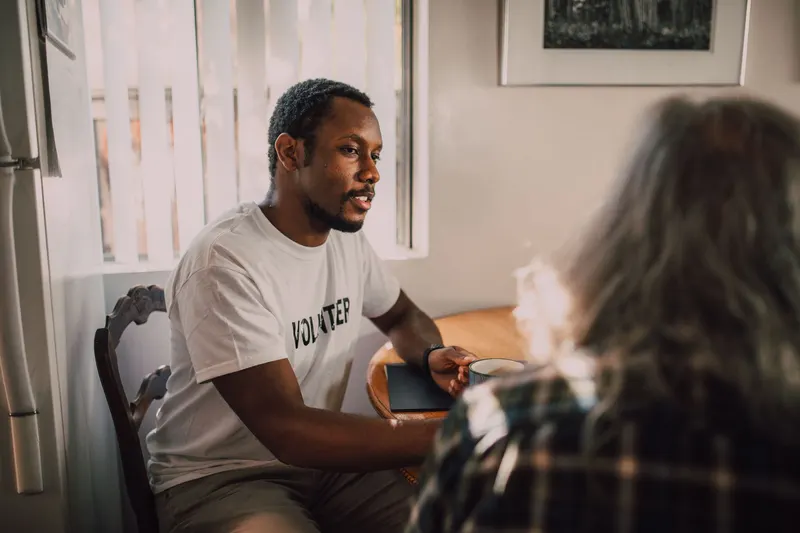
You type the message, read it twice, and delete it. It's two in the morning: asking for help feels like signing your own defeat. It isn't. What holds you back is almost never a lack of options, but what you tell yourself before you speak.
I believe that silence has three layers. None of them is solved with a motivational slogan; they are solved with honesty, with Scripture and, almost always, with another person sitting across from you.
The fear of being marked
Being seen is scary. Your family might bring it up at the table, the church group might turn it into a prayer request without asking you, or it might end up in some record as a label that follows you at school or at work. Feeling that fear is not a sin. The problem begins when fear makes the decision for you.
«Asking for help is not declaring yourself a failure; it is acknowledging something you already were: a creature who needs other creatures.»
Proverbs describes it as a snare: "The fear of man lays a snare, but whoever trusts in the Lord is safe" (Proverbs 29:25, ESV). A snare doesn't kill you all at once; it immobilizes you. And that's exactly how it feels: you want to speak, you know you should, and you don't.
The lie that you can do it alone
There is a version of faith that sounds very spiritual and is pure pride: "if I trust God, I don't need to tell anyone." There is also that whisper that compares your pain with other people's ("it's not that bad") so that you don't even name it.
God almost always works through means: people, conversations, books, medicine, professionals. Scripture doesn't promise that you will be enough for yourself; it promises grace. "But he said to me, 'My grace is sufficient for you, for my power is made perfect in weakness'" (2 Corinthians 12:9, ESV). Asking for help is not declaring yourself a failure; it is acknowledging something you already were: a creature who needs other creatures.
Your identity doesn't rest on a diagnosis, a grade, or the opinion of your group. It rests on Christ, and that gives you the freedom to say "I need help" without the world falling apart. The letter of James invites us to confess our sins to one another and pray for one another (see James 5:16): healing in community begins when someone dares to speak first.
The first step, specifically
First, put a name to what you feel in a simple sentence, without labels: "I can't sleep," "I'm afraid to speak up in class," "I've gone weeks without wanting to do anything." Naming it is already half the step.
Second, choose one specific person. Not "someone, someday": a trusted adult, your pastor, a mental health professional. Write today the message you deleted and send it first thing tomorrow morning. If it's hard, say it just like that: "I need to talk and I don't know how to start."
Third, don't use prayer as an excuse not to seek professional help. Praying and seeking help don't compete. God is sovereign and often answers our prayers through people with a first and last name.
And if you ever feel that you can't keep yourself safe, don't wait: call your country's emergency services, tell a trusted adult, and look up the helpline for your area in the findahelpline.com directory.
Asking for help doesn't make you less spiritual or less strong: it puts you back in your place, as someone who needs others and, above all, needs their Creator, who has not grown tired of you. This week, pick a name and send the message without deleting it. What scares you more: what you feel or what they will think of you?