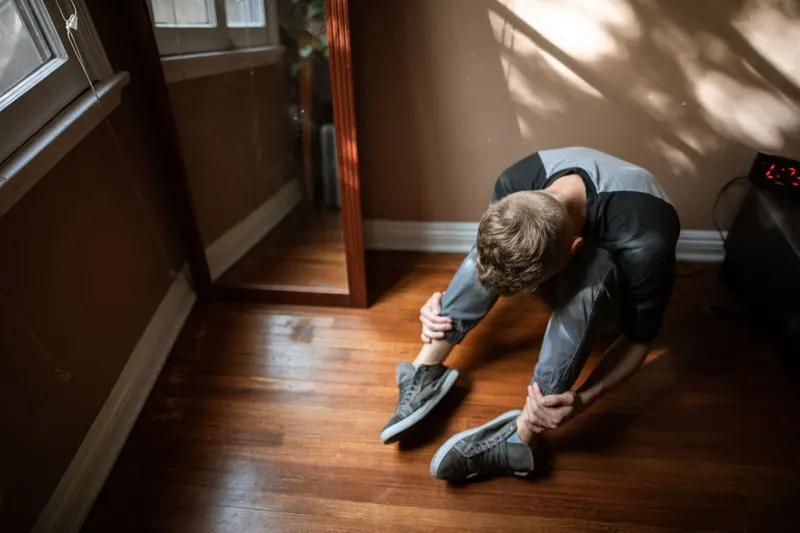
Praying Through Loneliness That Won't Leave
Psalm 34:18 says God is near to the brokenhearted, and Scripture ties that nearness to the call not to stop meeting together.

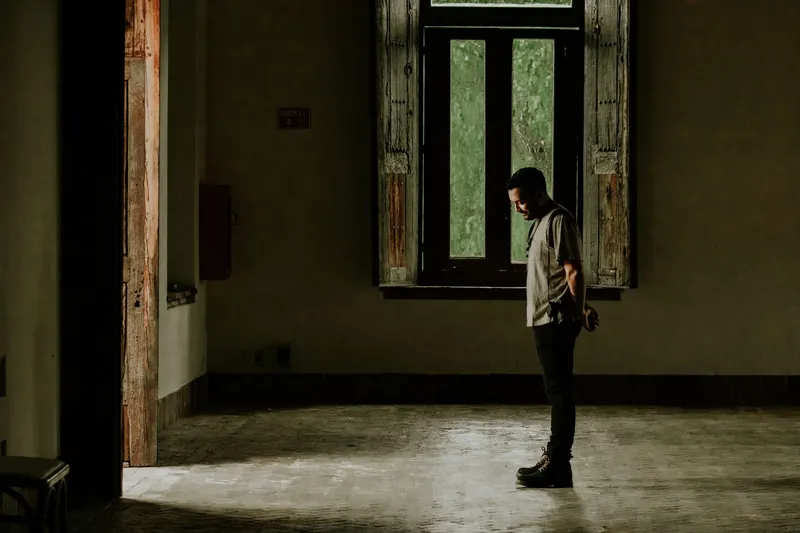
On Sunday you sang, said hi to three people and went home without anyone asking you a single question. Praying through loneliness, there in your car, sounds like a last resort.
Loneliness doesn't prove God has moved away. It's where He draws near, and from there He pushes you toward people.
When the names leave with the move
You changed cities for college or for work, and the old group is still in the chat but doesn't answer the same way anymore. And some loneliness doesn't come from a move at all: a friendship that cooled off without a fight, a Sunday at a new church where nobody knows your name.
«Community is a table where you have to sit down and, sometimes, bring the chair.»
It's worth naming something uncomfortable: sometimes we build the isolation ourselves. Pride that waits for the other person to text first. Shame that would rather not show up than explain why you're struggling. Gossip that broke up a group. Not all loneliness is your fault; even so, it's worth asking how much of the isolation is your own choice.
And even so, from the beginning God said it was not good for man to be alone (see Genesis 2:18). That's not a romantic detail: it's design. You were made to be seen.
There is a lie underneath all this: that if nobody reaches out to you, you're worth less. The gospel says the opposite. You were adopted by grace, not because of your popularity, and that identity doesn't depend on who answers your text.
Prayer doesn't replace people
Praying when the loneliness won't go away is honest, and it's the starting point. You don't need pretty words or a flawless faith.
"The Lord is near to the brokenhearted and saves the crushed in spirit" (Psalm 34:18, ESV). The verse doesn't promise that your house will be full tomorrow; it promises company in the exact place where it hurts.
Be careful about turning prayer into a technique for feeling better. It's not a button that switches off sadness. It's talking with someone real who already knows what you're going to say and doesn't walk away at your first clumsy sentence.
What does change is where you look. When you tell God about your day, you stop repeating to yourself that nobody sees you. And many times, in that conversation, the name of a person you could write to comes up.
Faith also sits next to you
The letter to the Hebrews calls us not to neglect meeting together and to stir one another up to love and good works (see Hebrews 10:24-25). That means small, slightly awkward steps: introducing yourself to the person sitting alone in the back pew, sending a text on a random Tuesday, staying ten minutes after the service even if you don't know anyone.
It doesn't always work the first time. There will be uncomfortable conversations and plans that fall through. Community is a table where you have to sit down and, sometimes, bring the chair.
This week, before you go to sleep, tell God out loud what you feel, in your own words, with no frills. The next day, tell one person you trust: your pastor, a friend, someone from your small group. Asking for company is an act of faith.
If the weight becomes heavier than your strength, reach out to your pastor or a health professional; in an emergency, call the emergency services in your country.
Who will you text this week?