Half of teens asked for help first
Nearly half of the 6,212 teens who answered UNICEF Colombia's survey put mental health as their biggest concern.

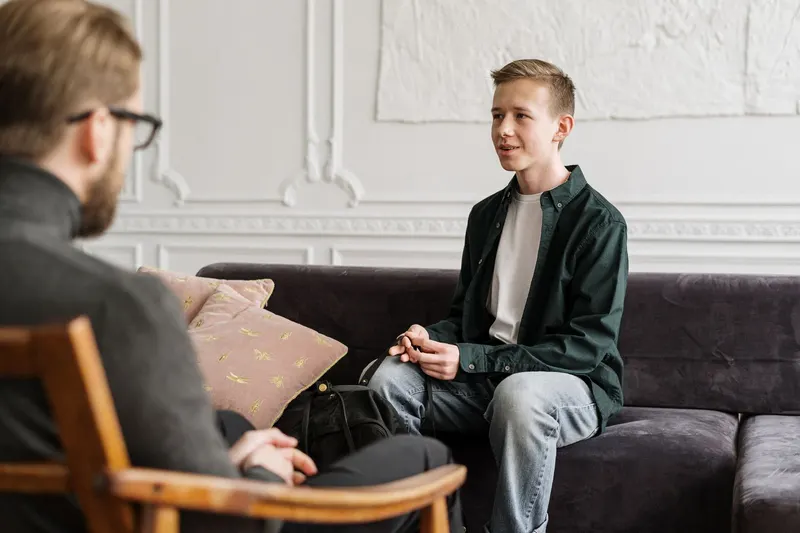
UNICEF Colombia asked 6,212 adolescents between 10 and 18 years old from all over the country for two months. Nearly half of the teens put mental health first. You're not exaggerating and you're not alone.
What 6,212 voices answered
The survey was virtual and spread through social media, with the push of the "Adolescentes en Movimiento por sus Derechos" network and those who went to Biz Fest in Cali and Medellín, UNICEF Colombia reported.
At least 2,817 participants, practically half, said that mental health issues — including depression and anxiety — are among the problems that most affect children.
«Asking for help on time is the most honest way to take care of what God entrusted to you.»
In second place came violence in schools, including bullying. Then come two concerns that speak to how a young person feels: not being taken into account in decisions that affect them and not finding job opportunities.
Further down the list are recruitment by armed groups, violence at home and in the community, lack of water and electricity, excessive screen use and climate change.
I stop at the order of that list. Before scholarships, before employment, before almost everything, someone wrote that they are not okay inside. That's not drama or weakness. It's an X-ray of what we are failing at as adults.
There's another irony. The same teens who grew up with a screen in their hand now ask for sports, cultural and recreational spaces so they don't live glued to it. And they add environmental care to the list.
Asking for help is not exaggerating
The teens themselves asked for more access to psychological care, especially in schools, and safe environments where bullying doesn't go unnoticed. They asked for it in their own words.
No one asks you for a diagnosis to listen to you. You can tell your mom, your dad, an older sibling, a friend who doesn't mock you, a school counselor or your pastor that there are days that weigh too much. Asking for help on time is the most honest way to take care of what God entrusted to you.
Nor is it about choosing between prayer and therapy. Prayer does not replace a health professional, and the professional does not replace the community that prays and supports. God often uses concrete people: one who listens, another who accompanies, another who reminds you that you are not alone.
A church that asks and waits for the answer
"Bear one another's burdens, and so fulfill the law of Christ." (Galatians 6:2, ESV)
That command is fulfilled in small things: asking how you are and staying to hear the answer. Also in not responding with a verse when someone needs to be told "I hear you." If you lead a youth group, learn to refer: there are pains that need a psychologist and not a rushed piece of advice.
Today you can do something concrete: choose a trusted person and tell them a real part of what you feel. Not everything at once; one part. And if you notice someone quiet, ask twice: the first answer is almost always "I'm fine"; the second opens the door. Who do you tell what you feel?




