Don't yell at AI: you're training yourself
71% of Brits and 67% of Americans say 'please' to AI, according to a 2024 survey.

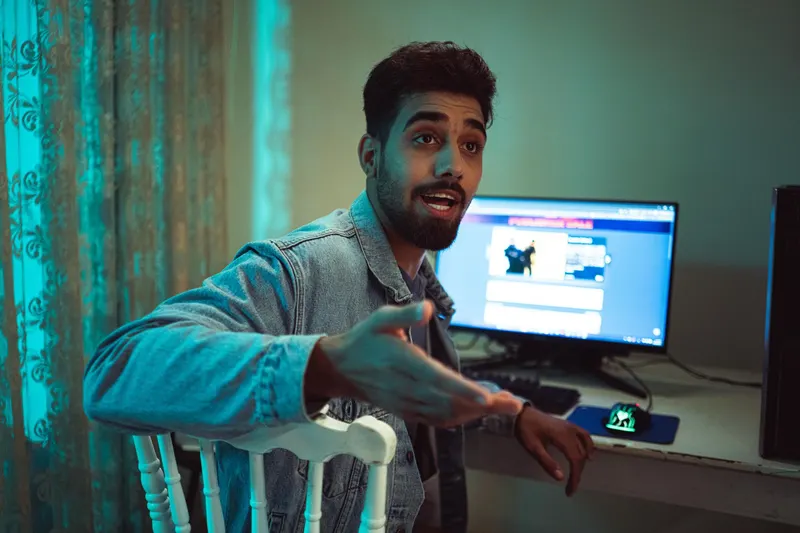
You ask a chatbot to finish your homework. Do you yell at the AI or do you thank it? In The Gospel Coalition, Pete Killingley asks whether we need to say 'please' and 'thank you' to chatbots.
Killingley cites a 2024 survey: 67% of Americans and 71% of Brits say they use those words with AI.
He also recalls that in 2018 Amazon added a feature so Alexa would respond better when a child said 'please.' Several parents had feared that barking orders at those devices was making their kids rude.
«AI is not your neighbor. Your mom is.»
His own response isn't what you'd expect from a Brit: he doesn't insult AI, but he doesn't say 'please' either. He treats it as a tool, not a friend. When he asked ChatGPT for a summary of his history, the system described him as 'transactional,' 'direct,' and 'pragmatic' (Sígueme translation). Sounds like a pretty honest picture to me.
Get it right by looking inward first
Killingley's first principle is formation: who am I becoming? That's the strongest point of the article. The screen depersonalizes, and that's why we write things we'd never say to someone's face.
He applies James 3:9-10 there, and the text lands like a stone: 'With it we bless our Lord and Father, and with it we curse people who are made in the likeness of God' (James 3:9, ESV).
I think he's right. Language models are designed to sound like a coworker, and that illusion invites us to let loose. If I treat a chatbot with contempt, I'm rehearsing contempt.
And what I rehearse in private doesn't stay private: it comes out in the group chat, in the post comment, at the dinner table.
Galatians says it bluntly: 'Do not be deceived: God is not mocked, for whatever one sows, that will he also reap' (Galatians 6:7, ESV).
There's also a detail here for parents. The 2018 concern about kids and Alexa wasn't exaggerated; it was intuition. Kids copy the tone of the home, even the tone used with a speaker.
The weak point: it still doesn't say what AI is
Killingley calls for not anthropomorphizing, and mentions that a survey found 25% of Gen Z already believes ChatGPT is conscious. Good data. But he falls short in defining the issue.
For him, everything ends in a personal wisdom decision, and there he loses edge. I'd put it more clearly: AI is not your neighbor. It has no soul, no conscience, it wasn't made in the image of God.
That's why speaking well to it doesn't fulfill a duty toward the machine. It's discipline for me. I don't speak well to it because it hears me, but because I'm hearing myself.
I also wonder about what the article doesn't touch: who trains those models, with what information, who makes money from each response, and who loses their job.
Treating AI only as a tool can become as naive as treating it as a friend. It's useful, not neutral.
What you do with the keyboard
If you're 18, 25, or 30, your life with AI has already started: homework, emails, resumes, business plans, even drafts of messages for that person you like. The question isn't whether you'll use it, but what habits it's leaving you.
Try a test this week. Open your chat history and look at it as if it were a conversation with a person. Do you write with clarity or with contempt? Do you ask for help or demand it?
It's not about paying homage to a program. It's about the same one who hears you in the chat hearing you when your mom asks you to take out the trash and you answer grumpily.
AI is not your neighbor. Your mom is. And the tone you practice on the screen is the tone you carry to the kitchen.
How do you write to a chatbot today and how do you answer the one speaking to you from your bedroom door?






