Asking for help is not a lack of faith
Anxiety isn't overcome with more effort; it's addressed with honesty, community, and professional help.

It's two in the morning and you're still awake, phone in hand and your chest tight. If that sounds familiar, I want to tell you something calmly: asking for help is not a lack of faith.
Maybe you hear it in your Bible study group, at work, or at home: that anxiety that won't go away and that sadness that sticks around. Mental health is talked about more than before, and yet among young Hispanics the same response still shows up: "just push through." As if the problem were about effort. As if resting were laziness.
What you feel is not sin
There's a widespread idea: that a Christian with anxiety is a Christian with weak faith. That's not true. The Bible doesn't treat distress as a shame to hide. David wrote it in his songs. Job cried it out. Jesus himself, in Gethsemane, said his soul was very sorrowful. If the Son of God named what he felt, you can too.
«Asking for help is not a lack of faith»
That doesn't mean everything we feel is true. Anxiety distorts: it shows you a future without God and without anyone near. But naming it before God and before someone else is the first step, and it's not weakness: it's honesty. As the psalm says: "The Lord is near to the brokenhearted and saves the crushed in spirit" (Psalm 34:18, ESV).
Help has a name and a face
You weren't created to carry it alone. God usually cares for us through ordinary means: a friend who listens without rushing you, a pastor who prays and doesn't minimize what you share, a mental health professional who knows what they're doing. Going to a psychologist or a doctor is receiving the wisdom God gives people to care for the life he gave. It's not putting faith in science above God.
There are two mistakes I want to avoid. The first: saying that praying is enough and that seeking treatment is little faith. The second: thinking that faith is just an accessory and that the problem is only chemical. Human beings are body and soul, and God is Lord of both. If there are symptoms that keep you from studying, eating, or sleeping, talk to a health professional soon. If thoughts of hurting yourself appear, seek help immediately: a trusted adult, your country's emergency services, or the findahelpline.com directory to find your country's helpline.
Sleep, community, and one step today
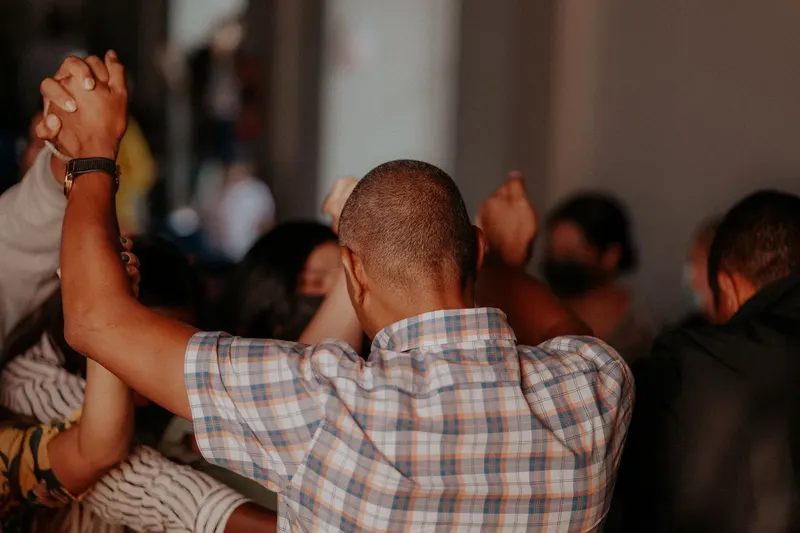
There are small, concrete things that sustain: getting enough sleep, eating, moving, putting the phone away before bed, and not staying alone with what you feel. Community also heals: a church where you can show up tired without acting, a small group that prays with you, people who know you by name. Your body is a gift you steward, not a machine you force until it holds up.
And when nothing changes quickly, hope isn't in feeling better tomorrow. It's in the One who said: "Come to me, all who labor and are heavy laden, and I will give you rest" (Matthew 11:28, ESV). That rest doesn't always come as an instant cure; many times it comes as a person who walks with you.
This week, choose someone. Send them a short message: "Can I tell you something?" That step, small and brave, is care for the gift of your life. Who are you writing to today?




