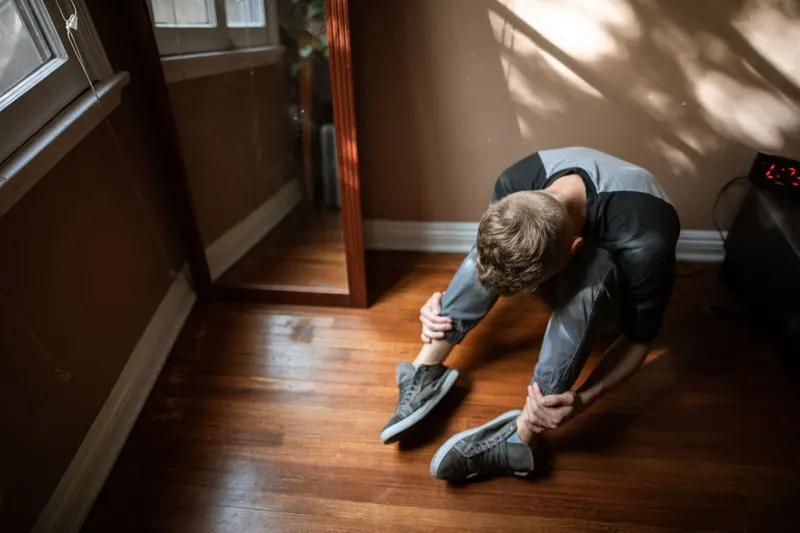
Your Anxious Kid Needs Company, Not a Sermon
Walking with someone doesn't mean erasing their pain or slapping on labels. It means staying close and taking the step to find professional help.


The closed door. The headphones on. Dinner goes cold and nobody says a word. A home can mistake silence for calm, and an anxious kid can go months without anyone asking. Maybe you are that teenager, or their older sibling.
Anxiety is a normal alarm in the face of pressure: an exam, an interview, other people's eyes on you. It becomes a problem when it rings all day and takes apart the basics: sleeping, eating, going to class, seeing friends. At that point, "it'll pass" no longer cuts it.
Signs that call for more than advice
Withdrawal that drags on. Irritability that explodes over small things. Activities dropped one by one. Sleep that won't come, appetite that disappears, headaches or neck pain that keep coming back. Also frequent crying, or fear of what used to feel normal.
«Presence doesn't cure, but it opens the door through which help comes in.»
None of these signs, on its own, confirms a diagnosis. And it's not your job to make one, or mine from this column. What you can do is look at the whole picture and how long it lasts: when the distress persists and starts to break up daily routine, it's time to see a mental health professional. Scripture says it plainly: "Anxiety in a man's heart weighs him down, but a good word makes him glad" (Proverbs 12:25, ESV). A good word is not a sermon; it's a conversation that lowers its guard.
How to ask without interrogating
Swap "why are you like this?" for "you seem tired, want to tell me about it?" The why demands explanations; the observation opens a door. And when the young person talks, resist the temptation to fix everything in thirty seconds.
Don't promise absolute secrecy. If there is risk, you need a trusted adult. And don't use faith as a reproach: "if you prayed more" sounds like condemnation and explains nothing. The psalmist writes: "The LORD is near to the brokenhearted and saves the crushed in spirit" (Psalm 34:18, ESV). God does not move away from the one who trembles. Neither should we.
Presence doesn't cure, but it opens the door through which help comes in. Asking today, even if the answer takes a while, is already an act of love.
When the church helps and when it gets in the way
It helps when it prays without making a drama of it, when it keeps confidences, and when it walks alongside the professional instead of competing with them. I believe it gets in the way when it blames, when it turns anxiety into a secret sin, or when it promises that a fast will fix everything.
A Christian community offers something no appointment can replace: a place where dignity doesn't depend on performance. A young person isn't worth their grades or a steady mood. They are worth something because they are made in the image of God. And the rest we are looking for isn't signed off by a passed exam: "Come to me, all who labor and are heavy laden, and I will give you rest" (Matthew 11:28, ESV).
This week, pick a ten-minute conversation, with no phone and no sermon, with one open question. If the distress is intense, talk to a trusted adult, a mental health professional or your pastor; in an emergency, go to the emergency services in your country, and at findahelpline.com you can find the helpline for your area.
Who was the last person who listened to you without rushing to respond?