Anxiety Reveals Where You Put Your Trust
Your body gets ahead of the scare: tight chest, short breath. What keeps you up at night also shows where you've been resting your weight.


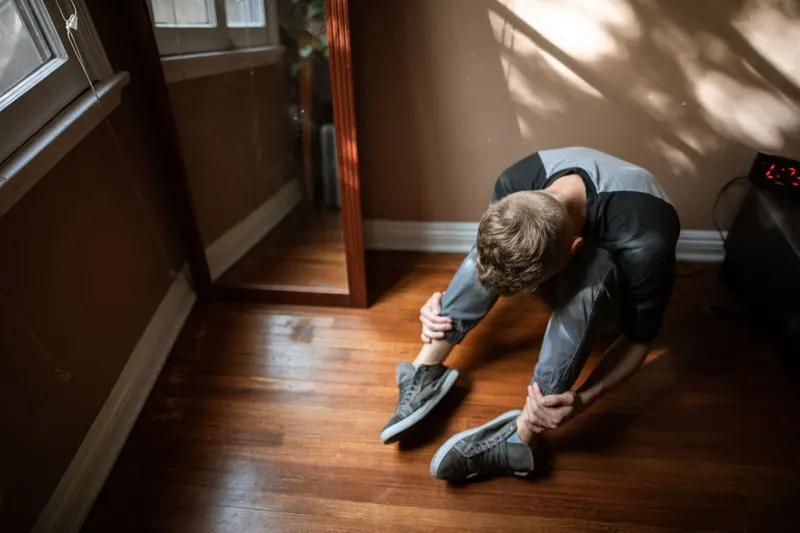
It's 2 a.m. and your mind is running through the list again: rent, the exam, what your family expects of you. Anxiety reveals where you put your trust, and that's uncomfortable. But looking there is the first step toward breathing again.
An alarm that points to the heart
The body jumps ahead: your chest tightens, your breathing gets shallow, your jaw clenches. That's why anxiety isn't solved with a verse taped to the mirror. It isn't a verdict on your faith either. It works more like an alarm: while you go over everything you can't control, your heart points to where it has placed the weight.
Paul wrote to people with real reasons to worry: "do not be anxious about anything, but in everything by prayer and supplication with thanksgiving let your requests be made known to God. And the peace of God, which surpasses all understanding, will guard your hearts and your minds in Christ Jesus." (Philippians 4:6-7, ESV). He doesn't ask you to force yourself into feeling calm. He points you in a direction: bring what distresses you to a Father who listens, who knows you by name, and give thanks even in the middle of the trembling.
«Anxiety isn't beaten by gritting your teeth; it lets go when it finds a firmer place to rest.»
Anxiety isn't beaten by gritting your teeth; it lets go when it finds a firmer place to rest.
The body needs care too
Elijah ran for a whole day, collapsed under a broom tree, and asked to die. God's first response wasn't a sermon: he gave him bread, water, and sleep. Afterward he spoke in a low whisper (see 1 Kings 19:4-12). The order matters. Some nights, what's urgent is to sleep, eat, and stop carrying everything alone. Sleeping is also an act of faith: you acknowledge that the world keeps running without your watch.
Spiritualizing exhaustion isn't faith; sometimes it's pride in religious language. Saying "if you trusted more, you wouldn't feel this" adds guilt to someone who is already worn out. The opposite shore fails too: explaining everything as chemistry and never asking about the soul. A health professional can evaluate what belongs to your body and mind; seeking that help doesn't take away from your faith or compete with prayer.
Say it before it eats you up inside
Holding up your family's expectations while answering "I'm fine" burns more energy than any exam. And that repeated "I'm fine" ends up sounding like a lie. The psalmist doesn't hide: "pour out your heart before him; God is a refuge for us." (Psalm 62:8, ESV). To pour out is a kitchen verb, for something tipped over without measuring.
Naming what hurts doesn't erase the problem. It breaks the idea that you're alone with it. God's grace doesn't ask you to show up presentable; it receives you just as you arrive and starts working from there. A church that prays and walks alongside you is a safe place, not a courtroom.
Today, before the day is over, tell someone you trust out loud: a friend, your pastor, an adult who knows how to listen, or a professional. If the weight has reached a dangerous point, call your country's emergency services and look for guidance at findahelpline.com. Who will you tell today what you've been repeating to yourself at 2 a.m.?