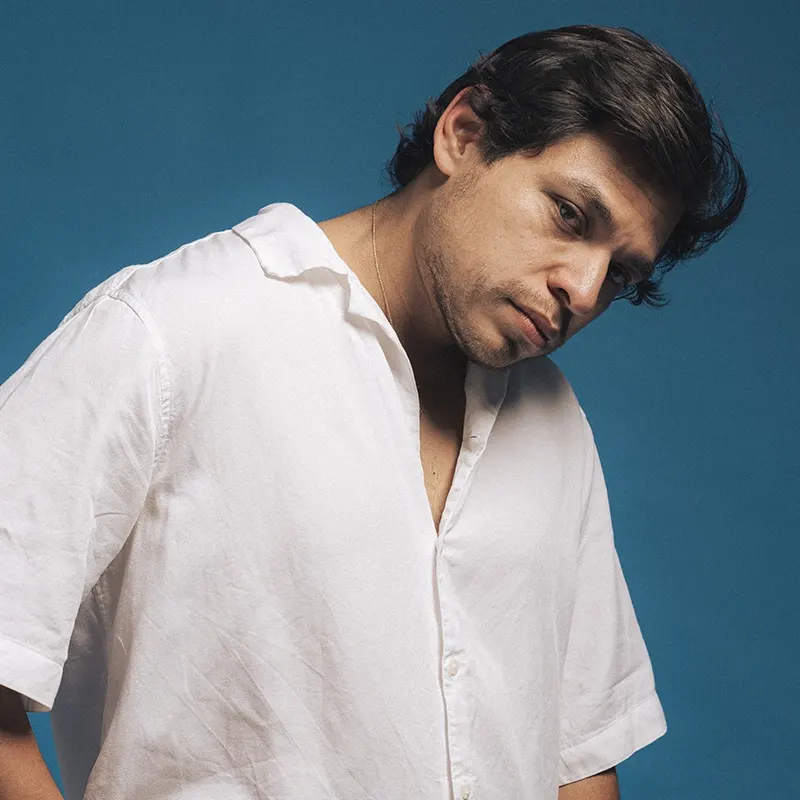
Aline Barros releases "Mira Lo Que Ha Hecho Dios"
The track brings together Aline Barros, Elevation Español and Emely Williams, and is now available on digital platforms.


Aline Barros, Elevation Español and Emely Williams released "Mira Lo Que Ha Hecho Dios," with an official music video and available on digital platforms, according to Aline Barros' channel.
The song doesn't start at the top. "In valley and darkness," "in the midst of the storm," the lyrics say before reaching the chorus. The singer doesn't boast of a life without blows: she names scarcity, thirst and fire. And she leaves an open question: "Ask me how."
Lyrics that start in the valley
The first verse speaks of provision "in scarcity" and water "when I was thirsty." That detail sets the tone. The song works in celebration, but also in the stretch that still hurts.
The chorus responds with three phrases: "He rescued me, and transformed me," "changed my lament into dancing" and "I can't be silent, I have to sing of how great is His faithfulness." The movement is clear: first the valley, then the song.
That structure resembles that of several psalms, where pain appears before praise. "You have turned for me my mourning into dancing; you have loosed my sackcloth and clothed me with gladness" (Psalm 30:11, ESV).
There is another psalm that sounds similar to that question in the chorus: "Come and hear, all you who fear God, and I will tell what he has done for my soul" (Psalm 66:16, ESV). Telling what God did is not boasting; it is letting others know that there is a way out.
Three voices in the same song
The single's credit brings together Aline Barros, Elevation Español and Emely Williams. The track is sung in Spanish and is already on digital platforms, with Spotify among the listening options.
For a group of young people, that three-voice format has something useful: it shows that a testimony is not told in just one way. A single voice can sound like a speech; three voices sound like a conversation, like church, like different people saying the same thing.
Every time a song in Spanish is sung in a youth service, something moves. The lyrics sound in the language you pray in, in the one you argue with your parents in and in the one you write your messages in. That weighs heavily for those who grew up between two cultures.
And there is a phrase that works as a hook for conversation: "Ask me how." It doesn't promise that nothing bad will happen, nor does it offer a formula to get out of a crisis. It is an invitation for someone to tell their story.
What to do with this song
You can try it in three different spaces this week:
- Play it at the start of the youth meeting and let the chorus lead into prayer.
- Take it to the small group and use the question "Ask me how" to open a round of testimonies.
- Add it to your playlist for the days when faith feels like walking through fire.
No one needs to exaggerate what God did for their story to be useful. Tell it as it is, with the valley and with the dancing. And ask someone in your group what God has done in their life this year.