Hulvey cancels sold-out show over sexual images
The Christian rapper and Dove Award winner refused to perform at a venue with pornographic material, according to ChurchLeaders.

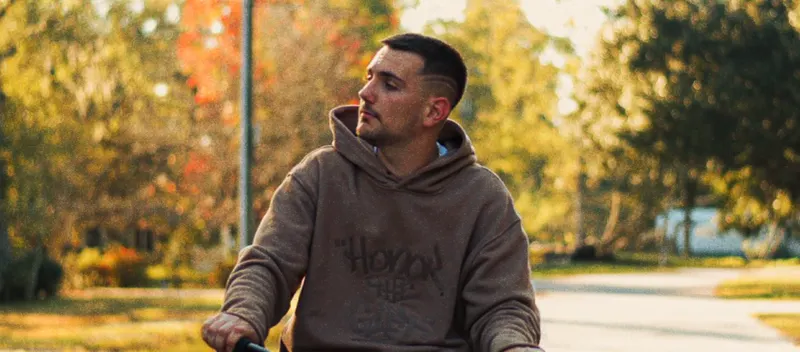
Christian rapper Hulvey, a Dove Award winner, canceled a sold-out concert because of the pornographic images at the venue, ChurchLeaders reported. The decision leaves a question that also applies to you.
A full house means a sold-out box office. Walking away costs money, relationships, and explanations. Even so, Hulvey didn't perform, according to ChurchLeaders.
We should look at the industry without naivety. The same business that sells you the ticket can profit from images no one wants to see next to their family. When that happens, neutrality ceases to exist.
«A sold ticket doesn't make what appears on a screen acceptable.»
The box office stops being an argument
We were taught that the market decides. If it sells, it's fine; if it fills, it's repeated. That logic works for choosing which T-shirt to buy, not for defining what degrades a person. A sold ticket doesn't make what appears on a screen acceptable.
Hulvey didn't need a legal battle or a campaign. He just needed to understand something: if the place exposes that, his presence there would be an endorsement. And without saying a word from the stage, he would have already said plenty.
"So, whether you eat or drink, or whatever you do, do all to the glory of God" (1 Corinthians 10:31, ESV). The question isn't just how big your opportunity is, but whom you give glory to when you take it.
Dignity, not a moral crusade
There's something more concrete than modesty. Pornography turns a person into an image for consumption: without a name, without a story, without the right to refuse. It's not a detail of the environment; it's a way of treating someone as an object.
And that closely affects women, who are almost always the ones appearing on those screens. Defending their dignity isn't a gesture of superiority. It's the minimum you would do for a sister, a friend, or a coworker.
"Let each of you look not only to his own interests, but also to the interests of others" (Philippians 2:4, ESV). That verse doesn't ask for boycotts or crusades. It asks you to think of the other before signing the contract.
Canceling is not the same as silencing
It's hard to say no in public, especially when money is on the line. But it's worth distinguishing two things. One is censorship that silences voices; the other is an artist deciding what he doesn't want to appear with. The second doesn't take freedom away from anyone: it only exercises one's own.
There's also room for respect. Whoever works at that venue is not the enemy. Whoever bought their ticket isn't either. You can disagree without lynching anyone, without memes, and without hate campaigns in the comments.
What doesn't hold up is calling someone "exaggerated" for refusing something small. Because it's rarely about the small thing. It's about how much you're willing to tolerate for a check.
The next time you have to decide—a job, an event, a favor that suits you—ask yourself a simple question before accepting: does what I'm about to support treat people as the image of God or as merchandise? You won't always have a clean answer. Keeping it in mind already changes what you accept.
And if you're the one who has to say no, you don't need a speech. Just be clear, respectful, and firm. The hope isn't that everyone applauds you, but that your conscience is clear before God.
Now I ask you seriously: if the concert was already sold out and the venue was the one putting up those images, would you get on stage? Tell me.