6 in 10 High Schoolers Say They Feel Sad
Nearly half also report persistent loneliness, according to a Fundación La Salle report based on Aprender 2024 data in Argentina.

Six out of ten Argentine high school students said they felt sad or had trouble enjoying things for three months straight, according to the first report from Fundación La Salle Argentina's Observatorio de Convivencia, reported by Infobae on October 7, 2026. How many in your group would say it out loud?
What the numbers say
60.6% of high school students in Argentina reported sustained sadness or difficulty enjoying things over the past three months. 54.7% reported trouble concentrating; 48.7%, nervousness or anxiety; and 46.6% spoke of persistent feelings of loneliness.
The data comes from Fundación La Salle Argentina's Observatorio de Convivencia, Conflictividades y Violencias en Entornos Escolares, which processed microdata from the Aprender survey between 2021 and 2024. Questions about emotional distress were only added in 2024.
«Naming what we feel is the first step to not carrying it alone»
The authors clarify a limit worth remembering: these are students' self-reports about their well-being, not the prevalence of mental health disorders. The foundation describes the picture as one of high psycho-emotional vulnerability and notes that relationships with teachers and classmates remain mostly positive.
That means the distress isn't explained only by what happens inside school. There's a broader, subjective dimension that also weighs in. And another uncomfortable fact emerges: 20.4% of high schoolers said they participate in online betting, 31% among boys and 11% among girls.
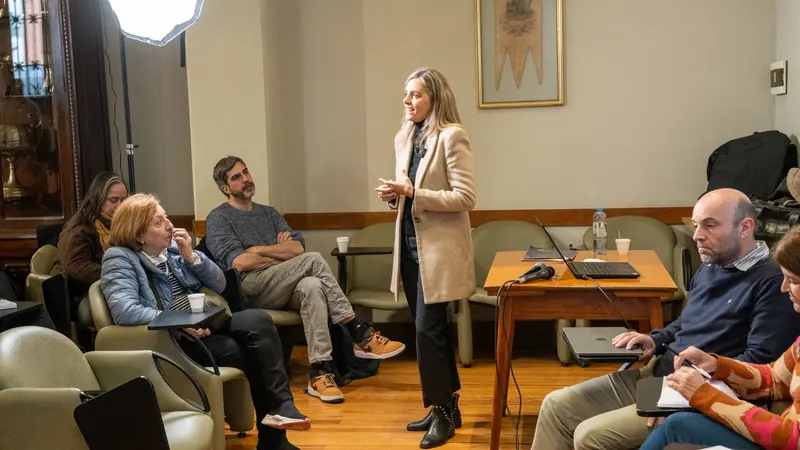
Patricia Marchitto, executive director of Fundación La Salle Argentina, said these are "data that alert us, that worry us and that challenge us," and called for early detection of the conditions that can foster this distress.
A sign that faith does not deny
Feeling sad is not a lack of faith or a weakness of character. The Bible doesn't hide pain: "The Lord is near to the brokenhearted and saves the crushed in spirit" (Psalm 34:18, ESV). A teenager who can't enjoy what they used to love deserves attention, not a sermon.
How many in your group would say out loud that they feel this way? Nearly half report persistent loneliness, and loneliness holds on better when no one names it. What isn't said doesn't disappear: it grows in silence and looks for outlets elsewhere.
Naming what we feel is the first step to not carrying it alone. That includes asking for concrete help, instead of toughing it out out of pride or waiting for it to pass on its own.
Adults who make time
The foundation focuses on what schools can do: build sustained spaces for listening, support and participation. Silvia Vaisman, coordinator of the Proyecto Escuelas Promotoras, summed it up with four simple verbs —watch, listen, welcome, accompany— and warned that they require time, available adults and training.
She also said nothing is enough if the school does it alone. Support needs families, neighborhood organizations, health services, schools and prevention programs working together. Ana Campelo, coordinator of the Observatorio, spoke of a student body with high levels of psycho-emotional distress.
If any of this sounds familiar, do something today: name a trusted adult —a family member, a teacher, your pastor— and tell them how you're really doing.
If the distress is intense or persists, seek a mental health professional. In an emergency, call your country's emergency services, and at findahelpline.com you can find the helpline that works where you live. You don't have to carry this alone.




