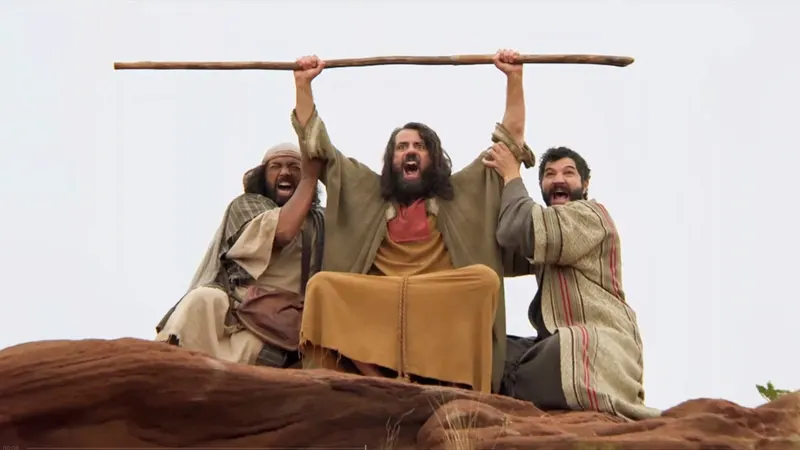
When God Says Yes, Other People's No Weighs Less
A short video from Niko Eme leaves a simple line; living it out when the no comes from someone you love is a lot harder.


"If God says yes, it doesn't matter who says no." The line comes with a short YouTube video under the name Niko Eme. Behind it is a question: who has the final word over your life?
When the no comes from someone who matters to you
The no that weighs the most almost never comes from an enemy. It comes from a dad who doesn't understand, a boss who measures differently, a friend who laughs, a leader who doesn't trust you. And it hurts, because fear of man is not a textbook theory: Scripture calls it a snare. "The fear of man lays a snare, but whoever trusts in the LORD is safe" (Proverbs 29:25, ESV).
That snare isn't broken with social media bravado. It breaks when your identity stops hanging on someone's applause, permission or approval. The one who trusts doesn't become insensitive; he learns to listen without handing over the helm.
«The no that weighs the most almost never comes from an enemy.»
There is a difference between respecting people and living off their approval. Respecting is loving your neighbor. Living off their approval is putting another person on a throne that only God can hold, and that throne falls along with the person.
Think of David. Before Goliath, contempt came to him from his own brother, who questioned his motives (see 1 Samuel 17:28). He won the battle before God, not before the opinion of his household.
God's yes doesn't come with applause
When the Bible speaks of God's yes, it doesn't present it as a shortcut to get what you want. It anchors it in a person: "For all the promises of God find their Yes in him. That is why it is through him that we utter our Amen to God for his glory" (2 Corinthians 1:20, ESV). The yes is Christ, not your plan.
That changes the question. Instead of "Will God approve what I've already decided?", the honest question is "Does what I want to do stand up before God?" Scripture has already said no to several things our culture takes for granted; there is no promise to claim there and no phrase to decree.
It also means that silence is not a no. Sometimes God affirms something and makes it grow slowly, without applause, without big signs, in small jobs and decisions nobody celebrates.
And there is a question worth asking yourself: how much of what you call prudence is really fear of disappointing someone?
How to live a yes that others don't understand
Examine the source of your fear. Are you afraid of the person, or of the failure that person represents? Naming it helps you avoid confusing respect with blind obedience.
Seek counsel from someone mature who will tell you the truth, not just what you want to hear. Community exists for that: to hold you up when other people's no weighs more than your conscience. And obey in the little you already know, even if the full picture hasn't arrived yet.
Learn to wait without bitterness. Trusting God doesn't make you cynical toward the person who told you no; it frees you to love them without owing them your identity.
This week, write down on a note the decision you're postponing out of fear of a human no. Take it to prayer, test it against Scripture and then talk it over with someone mature in the faith. What is that no you've been obeying for a long time without ever examining it?