Praying Without Pretending: Talk to God When You're Not Okay
The psalms of lament show that faith doesn't require hiding sadness from the God who already knows the heart.

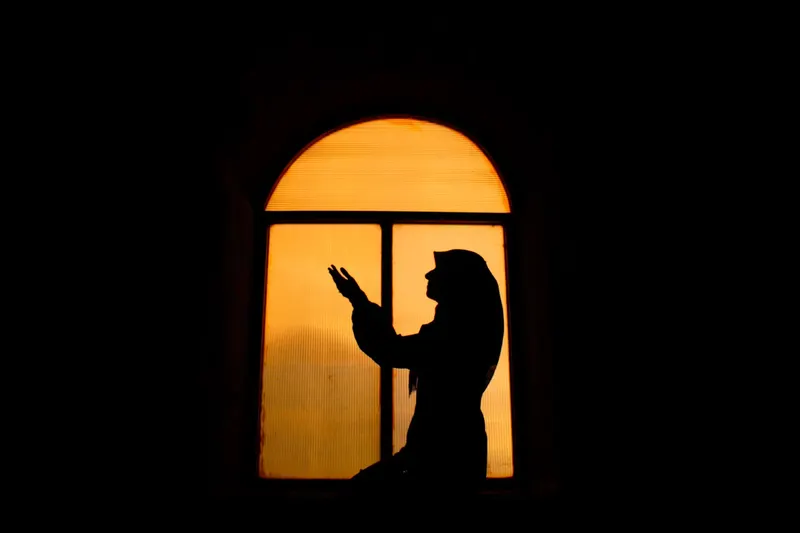
Praying without pretending is harder than it seems. At the gathering you answer "all good" and smile; in the chat you type "lol" and keep going. But the uncomfortable question is another one: can you tell God what you really feel?
We grew up with the idea that entering God's presence requires the uniform on: steady voice, correct gratitude, no cracks in sight. On social media, at home and at church we learned to present an edited version of ourselves. Being careful about how we speak is fine; the problem appears when calm becomes a mask and faith turns into a performance that even you don't believe.
What you keep quiet, he already knows
God doesn't need you to explain your case well for him to understand it. Psalm 139 opens with a man convinced of something uncomfortable: God has examined him and knows him. He knows what you're going to say before you open your mouth, and also what you'll never say.
«Faith doesn't promise the absence of pain. Faith is continuing to speak to God while the pain is still there.»
Praying honestly doesn't give him new information; it gives him trust. It's the difference between hiding the mess when visitors come and letting in the one who lives with you.
Pretending also has its logic. If I show what I feel, someone will correct me, will tell me I lack faith or that I'm exaggerating. There's a serious misunderstanding there. Faith doesn't promise the absence of pain. Faith is continuing to speak to God while the pain is still there.
The faith that complains also believes
A good part of the psalms are laments: believers who cry out, ask, complain and accuse. "The Lord is near to the brokenhearted and saves the crushed in spirit" (Psalm 34:18, ESV). There is no promise there that the brokenness will leave quickly. There is something better: God draws near to the one who is broken.
That pattern runs through Scripture. Elijah, exhausted, asks to die under a tree, and God doesn't rebuke him: he gives him food and sleep. Jeremiah weeps and writes.
And Jesus, in his darkest night, prayed without makeup: "Abba, Father, all things are possible for you. Remove this cup from me. But not what I will, but what you will" (Mark 14:36, ESV).
That the most honest prayer in history came from Jesus' lips should take away our fear. He didn't pretend, and sincerity doesn't condemn you: "There is therefore now no condemnation for those who are in Christ Jesus" (Romans 8:1, ESV).
Your worth doesn't depend on the average of your week. It depends on Christ.
A prayer without a script
This week, find five minutes without a script. Close the door, sit down and tell God the sentence you've been swallowing for months. Name it in your own words: the fear, the rage, the envy you don't confess, the guilt, the tiredness with church. Don't decorate it or put it in order.
Then read Psalm 13 out loud, and end the way the psalmist ends: speaking to himself to hope in God again (see Psalm 42:11). You can write it on your phone, in a note without a filter. No one else is going to read it; God already knew it.
And if the weight doesn't lift, don't carry it alone. Talk to a trusted adult, your pastor or a mental health professional. If you are in immediate danger, call your country's emergency services. At the directory https://findahelpline.com you can find the helpline that works where you live.
Praying for real doesn't fix everything at once. But it puts you in front of the one who can truly sustain you. What haven't you told God?
- #oración honesta
- #salmos de lamento
- #fe y dolor
- #identidad en Cristo
- #salud emocional
- #jóvenes cristianos




