Your phone isn't the enemy: your distracted heart is
Mi Punto de Vista puts ChatGPT and prayer in one headline; the problem isn't the screen, but expecting instant answers to everything.

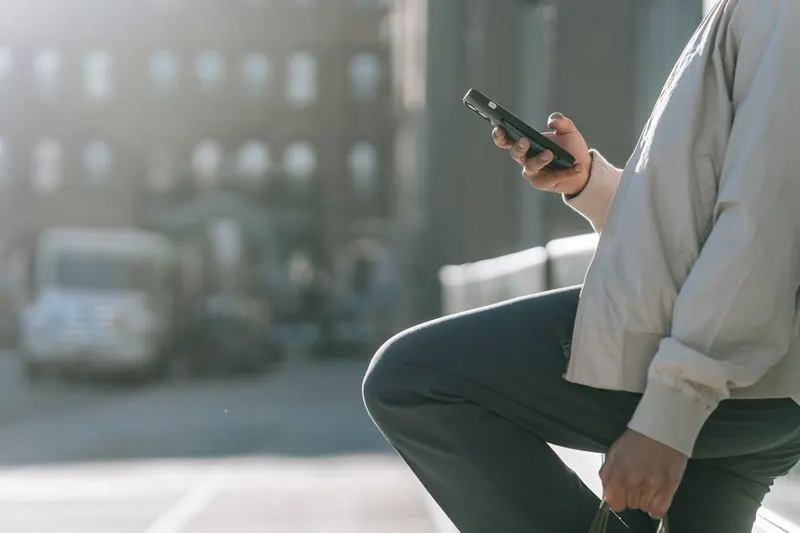
In Mi Punto de Vista, an article titled "Between ChatGPT and Prayer" talks about young people and digital distractions. I'd add something: the phone didn't invent the distracted heart. That heart was already there before the first notification.
What that title reveals
The title puts two things in the same sentence that fit into any young person's morning: asking an artificial intelligence for an answer and talking with God. You don't need more than that to recognize yourself.
You type a question into ChatGPT and get a paragraph in two seconds. You kneel to pray and, forty seconds in, you're going over the grocery list. The machine isn't to blame: it promises immediacy and delivers. Prayer, on the other hand, almost always calls for waiting. And whoever gets used to instant answers becomes impatient with everything, including God. That worries me more than any lit-up screen.
«The phone didn't invent the distracted heart»
Neither guilt nor technophobia
I distrust speeches that turn every advance into a threat. ChatGPT can help you organize notes, understand a difficult text, or write a work email. Creation is good, and so is technology; managing it wisely is part of our stewardship. What no app can do is shape a heart.
Scripture puts it differently. The psalmist doesn't ask for the surrounding voices to disappear; he asks: "unite my heart to fear your name" (Psalm 86:11, ESV). That is the right request. In Luke 10 you can see the contrast between Martha, busy with many tasks, and Mary, seated to listen (see Luke 10:38-42). Notice that Jesus doesn't take Martha's chores away. He points out where she put the center.
That's the nuance I find missing in almost every conversation about screens: the issue isn't solved with external rules, but with a heart anchored in something bigger than the notification of the moment. And no update can download that.
A small liturgy for this week
Faith isn't played out in airplane mode. It's played out in everyday life: in what you do when the alarm goes off, at the table before eating, in the minute before sleep. That's where a life of prayer is built or undone, with no applause and no witnesses.
I'm proposing something the size of one week: pick ten minutes a day, leave your phone in another room, and pray out loud with three simple phrases: thank you, forgive me, help me with today. No app, no streak to keep, no badges. Ten minutes without a screen, every day, for seven days.
If you forget on the third day, don't condemn yourself; pick it back up the next day. Discipline doesn't make you deserve anything. Grace is what sustains, and that's why you can start again without drama and without accumulated guilt.
When the week is over, tell me what happened. What's the first thing you open when the alarm goes off? If you feel like answering, maybe your answer will help someone else who is fighting the same battle in silence.