IACHR Denounces Persecution of Religious Leaders in Cuba
The president of the IACHR denounced the harassment of religious leaders in Cuba. The first Christian response isn't a meme: it's prayer.

The president of the IACHR denounced persecution of religious leaders in Cuba, according to ADN Cuba. The news raises questions that no headline can answer on its own.
For a young person who follows Jesus, the word "persecution" isn't a museum topic. Nor is it a medal to wear. It's a reality that Scripture treats with its feet on the ground.
Persecution: the Bible doesn't treat it as a surprise
Paul wrote something strong to Timothy: "Indeed, all who desire to live a godly life in Christ Jesus will be persecuted" (2 Timothy 3:12, ESV). It doesn't say "some." It isn't talking only about faraway countries.
«Truth is part of faith, not an accessory.»
That doesn't mean we go looking for conflict or call every inconvenience persecution. It means that when someone pays a price for their faith, the Christian response is not surprise but solidarity. Peter put it another way: don't be surprised at the fiery trial (see 1 Peter 4:12-16).
It's also worth remembering that pressure doesn't always snuff out the gospel. Paul reported from prison that his chains ended up pushing the message to places it hadn't reached (see Philippians 1:12-14). The history of the church has often been written this way: with less freedom and more dependence on God.
Praying for Cuba, without turning faith into a flag
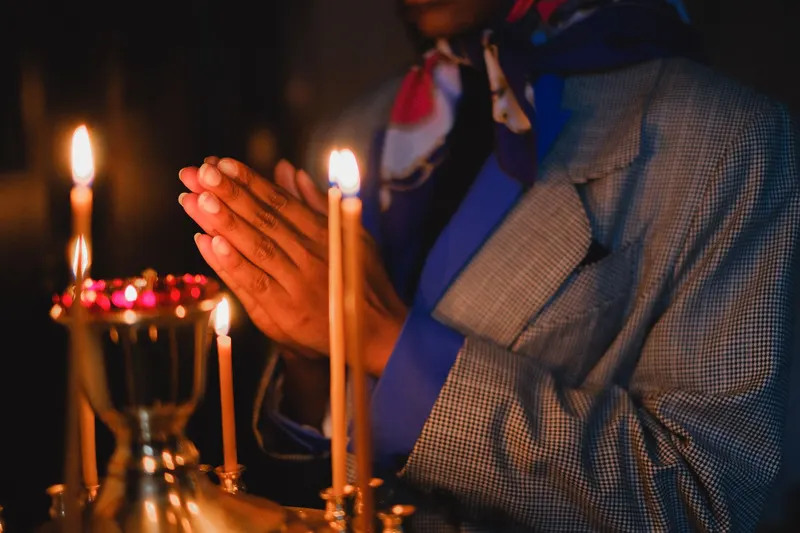
A believer's first response to a report like this isn't a meme or an angry comment. It's prayer. Scripture calls us to pray for rulers and all who are in authority, so that there may be peace and a quiet life of faith (see 1 Timothy 2:1-2).
And there is one more concrete step: "Remember those who are in prison, as though in prison with them, and those who are mistreated, since you also are in the body" (Hebrews 13:3, ESV). That includes praying for families we don't know, for churches no one mentions, and for leaders whose names we don't even know.
What's off limits is using other people's pain as a political argument. A Christian can love their homeland and culture; what they can't do is fuse the gospel with a side, a leader, or a flag. Christ's kingdom doesn't depend on who wins an argument on social media.
Verify before you share
Before forwarding anything about Cuba or any case of faith under pressure, ask yourself three questions. Did that person really say it? Did the outlet you're citing actually publish it? Are you adding details no one provided? Truth is part of faith, not an accessory. A Christian who repeats rumors harms the very gospel they defend.
It's also wise to watch your tone. You can denounce an injustice without mocking anyone and without turning an entire people into a caricature. Every person, believer or not, bears the image of God.
This week you can do something small and real: pray for the religious leaders of Cuba, for their families, and for the churches standing with them. Ask for courage for them and for yourself, because faithfulness is also learned when there is no pressure. What if today your first reaction to a story like this were to pray before weighing in?