Google opens SynthID Detector to everyone
The detector for images, audio and videos made with AI is now open to the public, according to Hipertextual.

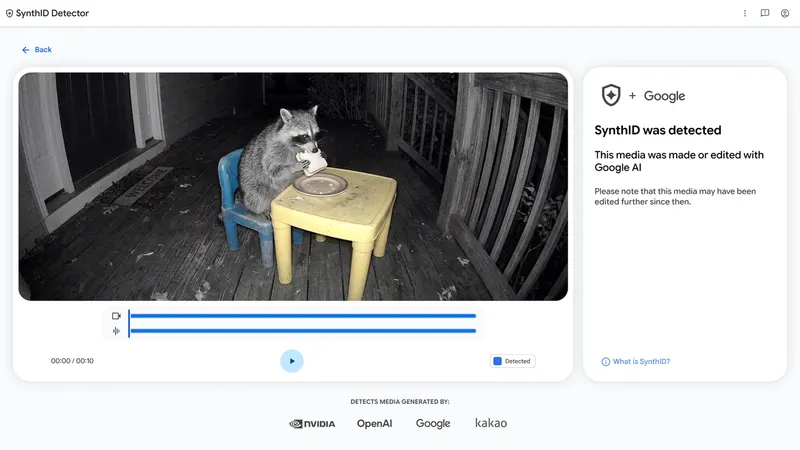
What if that audio that sounds like your mom wasn't recorded by her? Google opened SynthID Detector to anyone: the tool identifies whether an image, a video or an audio was created with AI, Hipertextual reported.
What SynthID Detector does now
Hipertextual reported that it is an online tool, launched in the middle of last year, whose access has just been expanded. Until recently it was not available to just anyone; now it is.
From now on, anyone can check whether an image, a video or an audio was generated with artificial intelligence. That detail is what changes: not the technology that creates those pieces, but who can review them.
«Trust is from people, not from software.»
And it matters, above all, when what circulates can no longer be distinguished by sight or by ear. A 20-second video with a familiar voice can make the rounds of the family group before anyone asks where it came from.
No detector thinks for you
A tool that identifies content made with AI is useful. It doesn't think for you. The important question doesn't end with whether that video came from a machine. It also matters whether the person who sent it to you is trying to inform you or move you.
That a file has an artificial origin and that someone wants to deceive you are two different things; the second one no technology solves.
Voices convince more than texts. An audio with the voice of a teacher, a pastor or a family member can move someone faster than any paragraph. That's why it's worth checking before letting that voice do its work in your head.
Scripture says it plainly: «The simple believes everything, but the prudent gives thought to his steps.» (Proverbs 14:15, ESV). The prudent one is not the one who distrusts everything. It's the one who looks. And looks because the truth matters to him, not because he lives in fear.
The opposite risk exists: believing that a detector makes us invulnerable. Trust is from people, not from software. It is built at the table, in the church chat, in the call to whoever sent you something strange. A program can flag a file; it cannot repair a relationship damaged by a hasty forward.
One step of yours before forwarding
This week you can do something concrete. When an audio, an image or a video that moves you to act —donate, get angry, opine, pray— arrives on your cell phone, stop and verify before passing it on.
If a real person appears, ask them. If it comes from an unknown account, look for who published it first. And if something feels too perfect, be a little suspicious. «But test everything; hold fast what is good.» (1 Thessalonians 5:21, ESV).
Doing that doesn't make you paranoid; it makes you trustworthy. In a family group, in a youth meeting, in a work chat, whoever verifies before sharing cares for others and also cares for themselves. Disinformation advances where no one stops. You can be the one who stops.
Google opened SynthID Detector to everyone and I'm glad it exists: it's a real help. But the habit of checking isn't installed by any company; you decide it, every time your finger rests on the forward button. Do you verify before sharing?






