Evangelicals in Guatemala Now Outnumber Catholics
Guatemala no longer has a Catholic majority: 43% identify as evangelical and 41% as Catholic, according to Latinobarómetro.

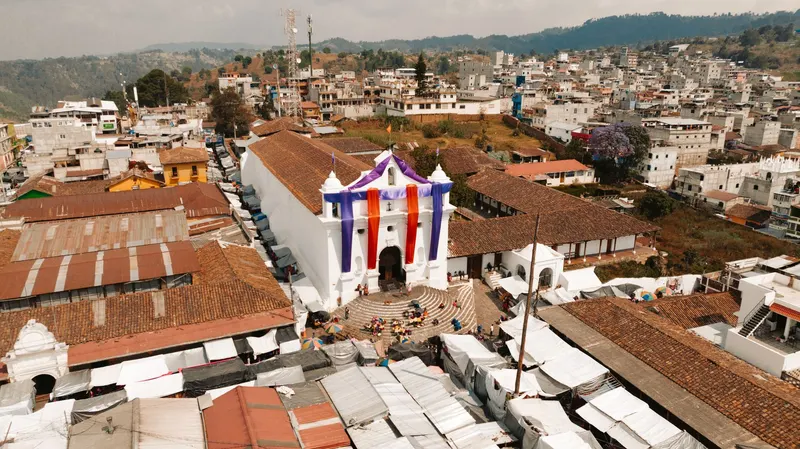
Evangelicals are now the largest religious group in Guatemala: 43% versus 41% for Catholics, according to the Latinobarómetro study released in November 2026, during Pope Leo XIV's tour.
The report came out while the pontiff was visiting Uruguay, Argentina and Peru, a trip that began on November 6, Infobae reported. The same question about religious identity has been asked for three decades in 17 Latin American countries.
The regional decline: from 80% to 55%
In 1995, 80% of Latin Americans said they were Catholic. That figure fell to 55% in the 2025/2026 survey: 25 points lower in three decades. Catholicism is still above 50% in nine of the 17 countries analyzed, but that lead is slipping at a different speed in each place.
«The number tells you where people are; it doesn't tell you whether they're being shepherded.»
Over the same period, evangelical churches grew from 6% to 19% of the regional population.
Central America concentrates the growth
Honduras tops the list with 44% evangelical population, followed by Guatemala at 43% and El Salvador at 42%. In Guatemala, Catholicism fell from 54% in 1995 to 41% today: 13 points. Other countries dropped further: Panama, from 89% to 46%; Honduras, from 76% to 38%. Mexico recorded the smallest decline, eight points, and remains among the countries with the most Catholics, alongside Paraguay and Peru.
Those who say they are atheist, agnostic or have no religious affiliation make up 12% in Guatemala, below the regional average of 18%. Uruguay reaches 49% and Chile 27%.
José Luis Pérez Guadalupe, a Peruvian theologian and sociologist, told the newspaper El País that in the region one sees "the move from Catholic to believing in nothing, from evangelical to nothing."
Sociologist Ariel Goldstein, author of the book Poder evangélico, attributed part of the growth to adaptability: less institutional rigidity, pastors present on social media, and closeness to the idea of prosperity, he told the same paper. On that last point, let's be clear: the Bible does not present wealth as proof of faith. Godliness is gain, Paul says, when it is accompanied by contentment (see 1 Timothy 6:6).
Faith that is practiced, trust that is falling
Guatemala maintains an active religiosity. Some 64% of the country's evangelicals consider themselves practicing or very practicing, compared with 56% of Catholics. Across the region the gap is similar: 62% and 48%.
Trust in churches fell from 72% in 1995 to 63% in the current survey, although it remains the highest among the institutions evaluated.
The study surveyed people aged 18 or older face to face in 17 countries: 1,200 cases in South America and Mexico and 1,000 in Central America, with a margin of error of 2.8% to 3%.
"I planted, Apollos watered, but God gave the growth" (1 Corinthians 3:6, ESV). If the numbers are telling you something about your country, the question lands in your congregation: what kind of church are you being for someone who walks in for the first time? This week, pray for your local church, invite someone to come with you, and ask that maturity would follow the numbers.