Did They Change the Bible? What Actually Changed
Yes, scribes made mistakes as they copied the text; no, that didn't erase what the authors of the New Testament wrote.

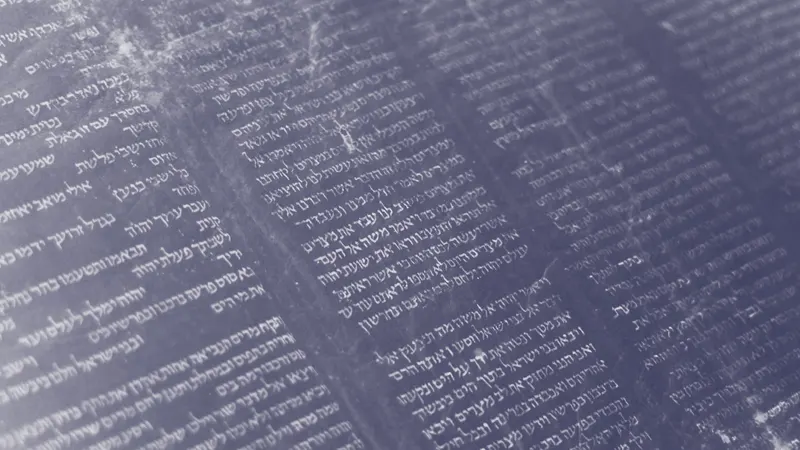
When someone tells you the Bible was changed, the question deserves better than a meme. Nobody has the papyrus Mark wrote on. What exists are copies, and they're worth looking at head-on.
For centuries, before the printing press, if a church wanted the gospels, someone copied them by hand onto papyrus or parchment. And yes: the scribes made mistakes.
What did change
An extra letter. A repeated word. A skipped line. A word that fell out along the way. Scholars call these differences between copies textual variants, and among the Greek manuscripts there are more than half a million of them. Put that way, it sounds like a catastrophe. Put properly, it isn't. Most are spelling differences or readings that change nothing. Daniel Wallace estimates that fewer than one percent are both meaningful (they affect the sense) and viable (they have a real chance of being what the author wrote).
«Faith doesn't rest on lost originals, but on a text God has watched over»
The originals wore out from use and disappeared. The copies remained, and with them the human fingerprints of the process: someone read, someone transcribed, someone made a mistake and someone else corrected it. God used imperfect hands to pass on a message that remains true in everything it teaches.
The copies check each other
The New Testament didn't stay in one place. Christian communities across the Roman world copied, carried, read and exchanged the Scriptures. That makes a massive change nearly impossible: rewriting everything would have required traveling the empire editing every copy. Change one in one place and plenty remain to compare.
And there are early witnesses. Fragment P52, the John Rylands papyrus, preserves part of John 18, with Jesus before Pilate, and dates to the first half of the second century. Then come P45, with sections of the gospels and Acts; P46, with a good portion of Paul's letters; and, in the fourth century, Codex Vaticanus and Codex Sinaiticus, which preserves the complete New Testament. Add to these ancient translations into Latin, Syriac and Coptic, and quotations from writers such as Clement of Rome, Ignatius, Polycarp, Justin Martyr and Irenaeus. In all, there are about 5,300 Greek manuscripts of the New Testament.
What no variant touches
There are two passages your own Bible flags as disputed: the long ending of Mark (Mark 16:9–20) and the woman caught in adultery (John 7:53–8:11). They aren't secrets hidden by anyone. They're known because the manuscripts are there to be compared, and translators point them out.
Peter Gurry puts it bluntly: "Neither the Christian faith nor the inspiration of the Bible is threatened by textual variants" (Sígueme translation). Craig Blomberg points in the same direction: no doctrine or ethical practice of Christianity rests solely on a disputed reading. And Bart Ehrman, one of the best-known critics of how the New Testament was transmitted, acknowledges in the appendix of the paperback edition of Misquoting Jesus that his position doesn't clash with that of his teacher Bruce Metzger: the variants don't touch essential beliefs.
The resurrection of Jesus, his deity, salvation, the Trinity: none of it hangs on a doubtful text. Faith doesn't rest on lost originals, but on a text God has watched over and that reaches us today. "Heaven and earth will pass away, but my words will not pass away" (Matthew 24:35, ESV).
This week, try a simple test. Open two Bible translations to the same passage and compare them word by word. Write down one difference, find out why it's there and tell someone about it. The evidence leads you to the text; the text leads you to a decision about what it says about God, about you and about Jesus. Don't leave it at curiosity.