Calama Evangelicals Call Believers to Be Living Torches
A faith you can see in everyday life, not just on a flag: that is the call from evangelical leaders in Calama.

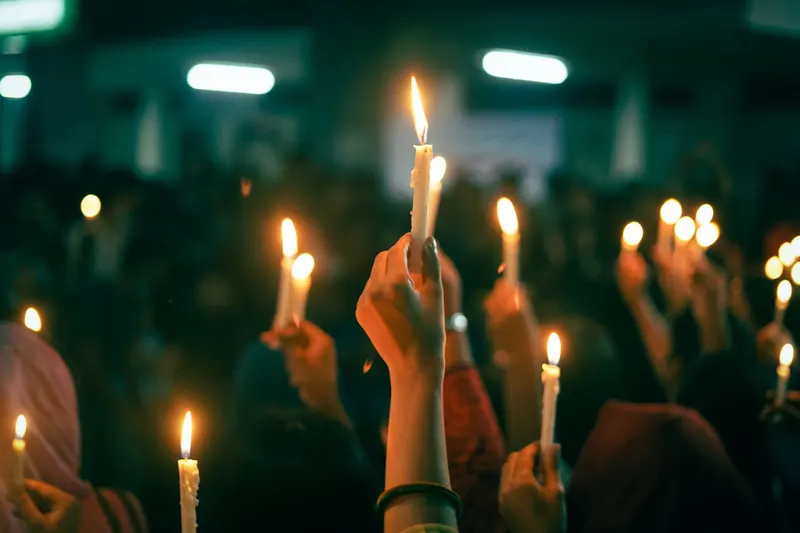
After a Christian flag was raised at the municipal building in Calama, evangelical leaders called on believers to be "living torches," Diario El America reported.
The image carries weight. A flag is raised once and then stays still, high up, swaying in the wind. A torch is held in the hand, moves forward, and burns itself up as it gives light. The first marks a place; the second walks to where other people are.
Light is lit where people are
Jesus did not commission flags. He said: "In the same way, let your light shine before others, so that they may see your good works and give glory to your Father who is in heaven" (Matthew 5:16, ESV). The text is not about symbols but about visible conduct: works that others see and that end up pointing to God, not to the person doing them.
«A torch is held in the hand, moves forward, and burns itself up as it gives light»
Paul wrote to a church surrounded by hostility and used the same idea: believers "shine as lights in the world" (Philippians 2:15, ESV). Not in a parade, but in the midst of a generation he described as crooked and twisted.
Light shows most where there is darkness. And it shows in the ordinary: how you treat the person working the register, what you do when no one is watching, whether you keep what you promised.
A lit torch has two uncomfortable traits. It lights up little from a distance: only the stretch it reaches. And it burns through its wax. Christian witness works much the same way. It doesn't fix an entire city all at once, and it costs something.
A flag at city hall, witnesses in the street
A Christian flag being raised at a municipal building raises legitimate questions about the place of faith in public space and about which symbol represents whom. Those are conversations with their own space, and they can't be settled in a single line.
The call from the Calama leaders, in any case, points to something no emblem can achieve on its own: faith becoming visible in people. A piece of cloth on a pole doesn't teach anyone to forgive, doesn't visit the sick, doesn't hold up a family that is falling apart. A community that believes and stays does that.
I see a risk here, and I say it carefully: getting used to the public gesture and neglecting the private one. You can sing loudly on Sunday and be harsh on Monday. Scripture says it plainly: faith without works is dead, and what we do without love is worth nothing (see James 2:17; 1 Corinthians 13:1-3).
Light yours this week
You don't need a title or a civic ceremony to be a torch. You need oil: time with God, Scripture read without rushing, honest prayer. Without that, the flame goes out and all that's left is a smoking stick.
Then pick a specific place. Your home, your classroom, your workplace, that group where almost no one confesses Christ. Ask yourself who needs light this week and go to them. Sometimes it's ten minutes of conversation; other times, a practical hand; often, simply staying when everyone else leaves.
A torch doesn't shine for itself. It is lit so that others can find the way. Who are you lighting the way for today?