Bible in 5: Mark 11 — Leaves Without Fruit
The fig tree and the temple tell the same story: an appearance that promises and doesn't deliver.

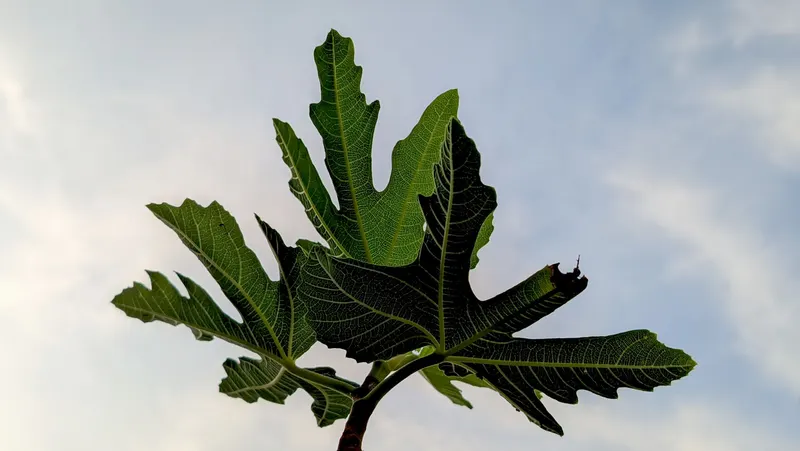
Mark 11:12-25 (RVR1960) contains three scenes that are really one. The evangelist weaves them together: the fig tree with leaves but no fruit, the temple turned into a marketplace, and the same tree withered from the roots the next day.
Jesus had entered Jerusalem amid hosannas and had spent the night in Bethany. On the way to the temple, he looks for figs on a tree that shows only leaves, and he curses it. Inside, he overturns the tables of the moneychangers and won't let anyone carry merchandise through. He quotes the prophet: "My house shall be called a house of prayer for all the nations" (Mark 11:17, RVR1960). That phrase comes from Isaiah 56; the one about a den of robbers comes from Jeremiah 7.
The second gospel is attributed to John Mark, a collaborator of Paul and Peter; scholars date it before the year 70 and place it in Rome, according to Britannica. Mark doesn't tell this in a straight line: he opens with the tree, puts the temple in the middle, and returns to the tree. When Peter points out the withered fig tree, Jesus answers by talking about faith: "Have faith in God" (Mark 11:22, RVR1960).
«Living faith produces; storefront religion ends up dry.»
Two scenes that say the same thing
The tree and the temple explain each other. Both had what was visible, and neither had what was essential. The fig tree didn't fail because it bore no fruit out of season; it failed because its leaves promised something it didn't deliver. The temple was still open, still full, still running. It just was no longer a house of prayer but a business, and anyone who came from far away was left at the door.
What it reveals about God and the gospel
God looks at the fruit, not the facade. Living faith produces; storefront religion ends up dry. And judgment begins with the house that bears his name, not the neighbor's.
God cares about the outsider: God's house is open to all peoples, as Isaiah 56:7 says. When religion turns into commerce, the foreigner has nowhere to pray.
The same account that shows severity shows mercy. The tree withers and, a few verses later, Jesus ties God's forgiveness to ours: "And whenever you stand praying, forgive, if you have anything against anyone" (Mark 11:25, RVR1960). The Father who forgives expects the same from his children.
And faith is not a formula. "Be taken up and thrown into the sea" is not a blank check or a technique for decreeing things. The context rules: faith that prays learns to forgive.
From leaf to fruit
We live surrounded by leaves: the Bible open in the living room, the worship playlist on the way to work, the Christian label at school, the youth group you show up late to. None of that is wrong until it's all there is.
Try three things this week. Pray out loud, with no phone within reach; five minutes is enough to start. Before you pray, name the person you have something unresolved with and let it go before God: forgiving doesn't erase what hurt, it renounces collecting on it. Also pick one area where your faith is just a shell—how you treat your own people when no one is watching, how you talk about someone in the group chat—and take a different step.
Maybe today you feel withered, with more appearance than life. The dried-up fig tree is not the last word of the story. The last word is "Have faith in God," spoken to disciples who still didn't understand anything, and a Father who forgives the one who prays.
If Jesus looked for fruit in your week, what would he find besides leaves?