Anxiety in them: the unseen burden
The Sunday smile doesn't always tell what happens on Monday inside the home.

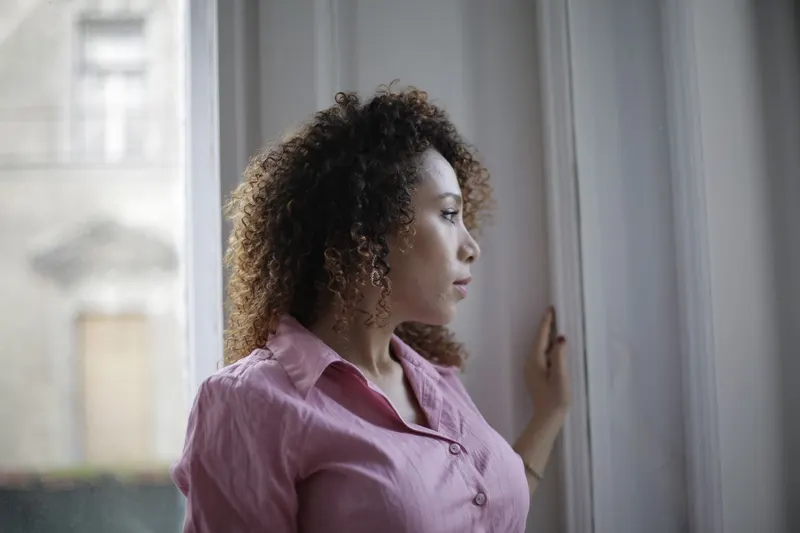
You think you know her: she sings, serves, gets good grades. And anxiety in them is still there, hidden behind a well-worn faith: a real burden that almost no one sees, and that isn't explained by a lack of faith.
The one who smiles at the meeting and cries at home
Maybe you know her. She arrives early, helps set up chairs, answers with a "everything's fine." Hours later, alone in her room, her chest tightens and she doesn't know who to tell. She's not an actress: she learned that showing pain makes people uncomfortable.
Anxiety and depression are not a sin or a character flaw. They are the response of a body and mind that have been carrying weight for too long. Scripture doesn't deny them; it looks at them with compassion: "The Lord is near to the brokenhearted and saves the crushed in spirit" (Psalm 34:18, ESV).
«Listening without fixing is a concrete way to love your neighbor»
And where does that weight come from? From several places at once. The pressure to perform at school, at home, and at church. The constant comparison on social media, where everyone seems to have their life more together than yours.
Add to that the habit of being the strong one in the group, the one who listens to everyone and doesn't bother anyone. And an inherited phrase that hurts more than it seems: "try harder."
There's an extra weight that many young Hispanic women know: being the bridge between two languages and two worlds, translating for the family and explaining the culture to outsiders without failing on either shore.
Why "try harder" isn't enough
Telling someone to try harder is like asking someone with a fever to lower their temperature by sheer willpower. The will is a gift from God, but it is not omnipotent. We are image of God and also fallen creatures: sin reached the soul, the body, and families.
God's grace doesn't compete with medicine or therapy. God is sovereign over both. He heals through ordinary means: a trained professional, a respected sleep schedule, an honest conversation, a church that doesn't judge. Seeking help is not a lack of faith; it is stewardship of the life God gave you.
Jesus said: "Come to me, all who labor and are heavy laden, and I will give you rest" (Matthew 11:28, ESV). That rest often comes through paths we didn't expect: a timely diagnosis, a friend who listens without interrupting, a pastor who prays and also recommends professional help.
Accompanying without preaching
You don't need to have the right answer. You need to stay. Ask how she's doing and let the silence last as long as it needs to. Don't turn every pain into a lesson. Don't promise that everything will be fixed tomorrow; promise to be there today.
And if the weight is heavy, if frightening thoughts appear, if sleep is gone or nothing has flavor, talk to a trusted adult, a health professional, or your pastor.
In an emergency, call your country's emergency services. At findahelpline.com you can find the help line available where you live.
No one should carry this alone. The church can be the place where the truth is finally said out loud, without masks and without fear.
Listening without fixing is a concrete way to love your neighbor. This week choose one person and ask a simple question: "Who can you tell?" And if that person is you, let someone see you. You don't have to pretend you're okay.
God doesn't call you to the mask; He calls you to receive His grace in community, with the means He has already placed within your reach.




