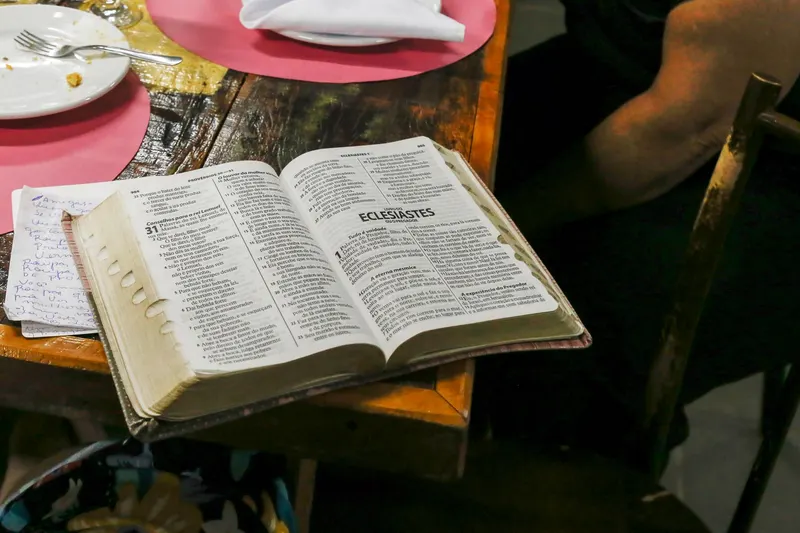
ACIERA marks Evangelical Churches Day in Argentina
The Argentine gathering brought pastors and national authorities to the same table, CBN reported.


ACIERA brought together pastors and Argentine authorities to commemorate the day of the evangelical churches, CBN reported. The gathering united those who shepherd congregations with those who hold public authority in the country.
A date that looks outward
A day devoted to evangelical churches isn't exhausted by services and formal greetings. It lets society see the face of those congregations that meet every week in a storefront, a converted garage, or a corner of the neighborhood. Behind each one are names: families who sustain the work, volunteers who teach people to read, people who cook for a sick neighbor.
That work almost never shows up in the public conversation. That's why a commemoration with authorities carries weight. Not because the church needs applause, but because it helps name the church as part of the life of the country and not as a group of strangers.
«Pastors and authorities sitting together does not erase the difference between their tasks.»
The date also works as a mirror: it invites each congregation to ask what it does outside its building, and whether what it preaches on Sunday holds up on Monday.
Two tasks that don't mix
Pastors and authorities sitting together does not erase the difference between their tasks. The State is responsible for administering justice, laws, and resources. The church is called to preach the Word, celebrate baptism and the Lord's Supper, and serve our neighbor. When that line is crossed, both lose.
Scripture asks for prayer for those who govern, not for power for the church: "for kings and all who are in high positions, that we may lead a peaceful and quiet life, godly and dignified in every way" (1 Timothy 2:2, ESV). Paul wrote that line to believers living under an empire. He wasn't demanding privileges. He was asking for peace so the gospel could be lived out.
Serving the city, not conquering it
The prophet Jeremiah gave a similar instruction to a people in exile: "But seek the welfare of the city where I have sent you into exile, and pray to the Lord on its behalf, for in its welfare you will find your welfare" (Jeremiah 29:7, ESV). The command wasn't to take over Babylon. It was to work for the good of a city that wasn't theirs.
That remains the task of a local church. It serves its country when it forms honest neighbors, when it walks with families that are falling apart, when it opens the door to someone who arrived with nothing. Also when it prays for its rulers even if it doesn't share a single one of their ideas. None of that needs a stage: it happens in a kitchen, on a hospital visit, in a literacy class.
Evangelical Churches Day doesn't call for a parade or a platform. It calls us to remember that there are congregations at work in the country, often without anyone naming them.
If you want to do something this week, write down the names of three authorities in your country, local or national, and pray for them as Paul asked. If you have a pastor nearby, tell him you've seen his work. Faith is also lived out in public, and it begins in secret.